US Disables Two Iranian Tankers, Destroys a Third, After Missiles Target Navy Warships
CENTCOM named the vessels and warned it would keep targeting Iran’s oil fleet, while audio obtained by CNN shows the US military warning one tanker’s crew by radio before striking it.
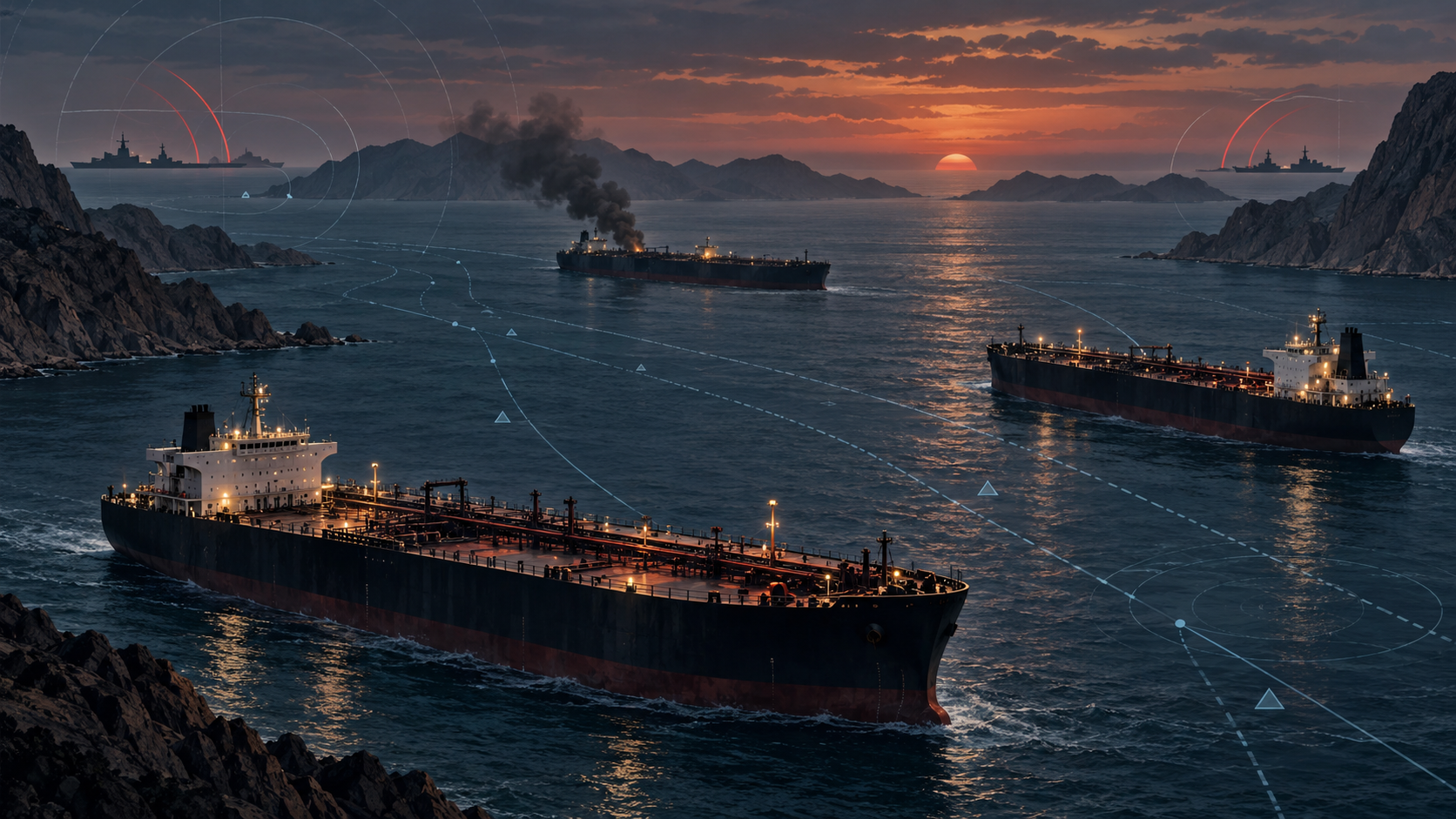
United States forces disabled two Iranian oil tankers and destroyed a third on Saturday, hours after the American military said Iranian ballistic missiles targeted two US Navy warships, sharply escalating a conflict that is moving from military infrastructure toward the ships that carry Iran’s oil.
US Central Command said an aircraft carrier and a guided missile destroyer evaded multiple unprovoked Iranian attacks while patrolling the region, and that no American personnel were harmed. In response, CENTCOM said it permanently disabled two crude oil carriers, the M/T Downy off the coast of Kharg Island, Iran’s principal crude export hub, and the M/T Stark 1 near Jask. A third vessel, the M/T Kylo, was destroyed in the Gulf of Oman. The Kylo was not carrying oil at the time, and CENTCOM said its crew had been directed to abandon the vessel before US forces struck it in multiple locations. CNN reported it had confirmed audio in which an American-accented voice, addressing the Stark 1 by radio, said, Motor Tanker STARK 1, this is the United States military aircraft. I am preparing to fire at your stern; you have 10 minutes to clear the crew from the stern of your ship, followed by a final warning to abandon ship before the strike. CENTCOM described the targeted vessels as part of a multibillion-dollar shadow network that funds the IRGC and its regional proxies.
Admiral Brad Cooper, the CENTCOM commander, issued a direct warning of further action. Let the message to the IRGC be clear, Cooper said in a statement: if you shoot at two of our ships, we will impose an even higher economic cost, taking out three of yours. Defence Secretary Pete Hegseth posted separately on social media that it’s simple. If Iran shoots at US ships, we will destroy and sink their oil tankers, adding that Iran’s oil tanker fleet is defenceless and that the US could strike it in the Middle East or the Indo-Pacific region.
What Iran says happened
Iranian state media reported earlier Saturday, before the US statement, that four US missiles had struck a tanker roughly six miles from Kharg Island, with Iran’s semi-official Tasnim news agency saying there were no casualties and that the crew was being evacuated. Iranian forces separately claimed to have targeted three tankers and vessels linked to the United States. As of Saturday evening, there was no immediate official Iranian government statement responding directly to CENTCOM’s account, and the specific details of Iran’s own claimed strikes had not been independently established in reporting available at the time this piece was prepared.
A pattern of escalation, not an isolated exchange
Saturday’s strikes did not occur in isolation. They came nearly a week after the US and Iran resumed attacks following roughly a month of relative calm, and one day after President Trump had described the conflict as small potatoes in public remarks. Earlier in the week, at least five people were killed in a US bombardment of southern Iran that included a strike on a wedding, according to NPR. On August 31, Trump posted an AI-generated video on social media depicting Kharg Island being destroyed. The US Treasury Department announced sanctions Friday against a Turkish investment bank and two subsidiaries it accused of helping fund an arm of Iran’s Revolutionary Guard, one day before Saturday’s tanker strikes.
Targeting oil tankers directly also marks a shift from earlier in the war. A US strike on Kharg Island in March 2026 hit more than 90 military sites while deliberately avoiding oil and gas infrastructure, according to CENTCOM’s own statement at the time. Saturday’s action, by contrast, directly targeted three vessels tied to Iran’s oil trade, a sector CNBC reported Iran uses to export roughly 90 percent of its crude, before the war, via Kharg Island.
Why Kharg Island matters economically
Kharg Island’s centrality to Iran’s crude export infrastructure gives the exchange particular economic significance, and sustained military activity around it could affect vessels loading or transporting Iranian oil going forward. The Strait of Hormuz has already been operating under severe pressure for months amid intermittent fighting, with Iran increasing scrutiny of shipping. At the same time, US military operations and sanctions have constrained Iranian exports.
What remains uncertain
Attributing responsibility for individual attacks at sea still requires careful analysis. Statements from the US military and Iran’s Revolutionary Guard describe each side’s own account of events and do not, on their own, establish every disputed detail of an encounter that occurred rapidly and at sea. What is established, from both sides’ own public statements, is that both the United States and Iran are now openly describing attacks involving oil tankers and naval vessels in waters central to global energy trade, a real change in the conflict regardless of how individual disputed claims are eventually resolved. The next question is whether Saturday’s exchange remains a limited, bounded response or becomes the start of a sustained campaign against oil shipping, something that could transmit the military confrontation rapidly into freight costs, insurance premiums and global oil prices.
Comments
Join the conversation
Enter your email — we'll send a 6-digit code so you can post a comment. No password needed.
- Be the first to comment.