
US and Iran Exchange Fire Near Strait of Hormuz After Month Long Pause, Gulf States Drawn In
A US strike on Iranian rocket launchers ended thirty one nights of calm. Iran says two people were killed, retaliated toward US positions in Jordan, and the UAE reported intercepting an Iranian drone, though accounts differ on the exact sequence.
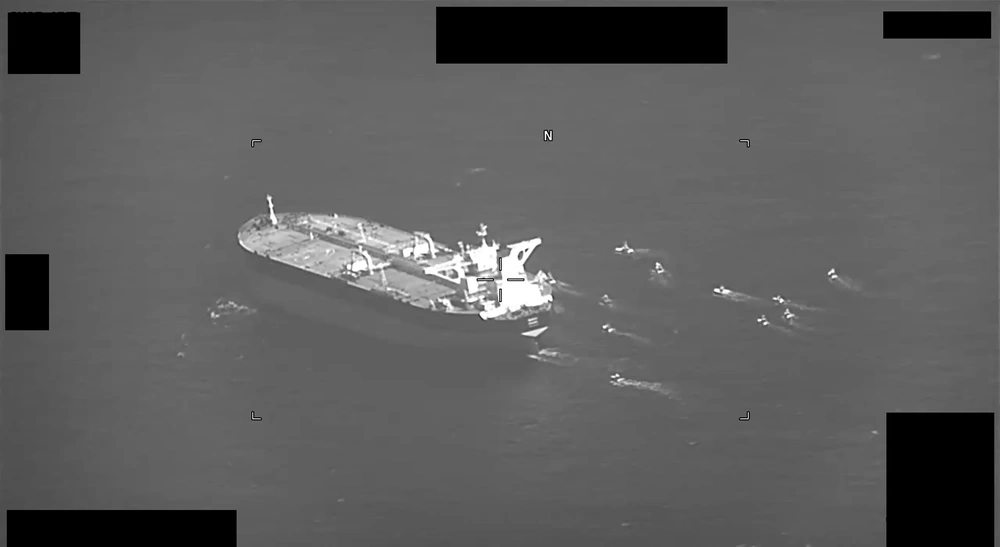
The United States and Iran exchanged military fire over the weekend for the first time in about a month, ending a pause that had reached thirty one consecutive nights and reopening a dangerous phase of the conflict around the Strait of Hormuz, with neighbouring Gulf states increasingly drawn into the confrontation.
A strike, a casualty count, and a named justification
US forces struck two Iranian rocket launchers on Larak Island on Sunday, August 30. CENTCOM spokesman Captain Tim Hawkins said the Islamic Revolutionary Guard Corps had positioned themselves to launch rockets carrying sea mines in the vicinity of international shipping in the Strait of Hormuz. We eliminated the launchers on Larak Island before any sea mines were ever placed in the water, Hawkins said, describing the operation as a limited, precise action against what CENTCOM called an imminent threat. That justification is the United States account of the operation and has not been independently established. Iranian state media reported that two people were killed and several others wounded in the strike, according to ABC News and PBS NewsHour, and the IRGC acknowledged what it called the martyrdom and injury of several of our fighters and compatriots, vowing the attack would result in the punishment of the aggressor.
Retaliation, and a discrepancy worth flagging
Iran condemned the attack and retaliated with ballistic missiles and drones against US positions. Multiple outlets confirm Iran targeted US sites in Jordan, specifically King Hussein Air Base and Al Azraq Air Base according to one defence industry report, with Jordanian forces intercepting the incoming fire. Accounts differ, however, on whether the UAE was struck as part of this same Sunday retaliation or in a separate, later incident. NPR reported that Iran retaliated by firing ballistic missiles and drones at US forces and helicopters at an air base in the UAE alongside the Jordan strikes on Sunday. Other outlets, including PBS NewsHour and ABC News, describe the UAE’s confirmed drone interception as occurring Monday, a day after the Jordan strikes, without stating it was part of the same wave. Because these accounts do not fully agree on timing, this remains an open question rather than an established sequence, and should be resolved against additional CENTCOM or UAE Defence Ministry statements before being treated as settled.
What is confirmed is that the UAE said Monday it intercepted an Iranian drone over its territorial waters, calling it a dangerous escalation and a violation of the country’s sovereignty, according to the Associated Press. No damage was reported. Iranian state media separately claimed that Iranian forces had attacked Al Minhad Air Base in the UAE. The Emirati government denied that the base had been targeted. Because these accounts directly conflict, NordoVista does not treat the claimed attack on the base as established fact. Iran separately claimed its air defenses shot down a US MQ-9 Reaper drone over the strait, a claim that has also not been independently confirmed, according to defence reporting reviewed for this piece.
Energy markets react quickly
The renewed fighting matters because the Strait of Hormuz remains one of the world’s most important energy routes, carrying roughly one fifth of global oil shipments. Months of conflict have already disrupted commercial traffic and increased shipping and insurance costs. Brent crude rose above 90 US dollars a barrel, up roughly 25 percent since the war began in February, according to ABC News, as traders assessed the possibility of renewed disruption. Gulf stock markets also declined as investors moved away from risk.
A difficult regional balance
Both Washington and Tehran continue to say they do not seek an uncontrolled regional war. Iranian President Masoud Pezeshkian has said Iran does not want a wider conflict but will respond when attacked. The United States has described its latest action as limited and focused on protecting shipping through the strait, noting it had completed clearing sea mines from the strait’s international shipping routes just the week before Sunday’s strike. Those positions have not prevented repeated escalation.
The danger increasingly extends beyond direct US and Iranian forces. Countries including Jordan and the UAE are being required to intercept missiles or drones even while seeking to avoid becoming active parties to the conflict, a pattern a detailed conflict tracker reviewed for this piece noted also occurred during an earlier August 18 episode, when the UAE reported intercepting Iranian ballistic missiles that Tehran denied firing. Gulf states host US military facilities, depend heavily on secure shipping routes, and maintain their own diplomatic relationships with Iran, and continued exchanges could make that neutral position increasingly difficult to sustain.
The next major test will be whether Sunday’s and Monday’s attacks remain a limited episode or develop into another sustained cycle of retaliation. If that happens, the consequences could extend rapidly from military installations to energy markets, commercial shipping, and the wider political stability of the Gulf.
Comments
Join the conversation
Enter your email — we'll send a 6-digit code so you can post a comment. No password needed.
- Be the first to comment.