Türkiye’s Fund Scandal Is Now a Test of the State, Not Only the Market
With 131 funds liquidated, a former minister under investigation and journalists in custody, the question is whether Türkiye’s institutions can investigate the powerful as seriously as everyone else.
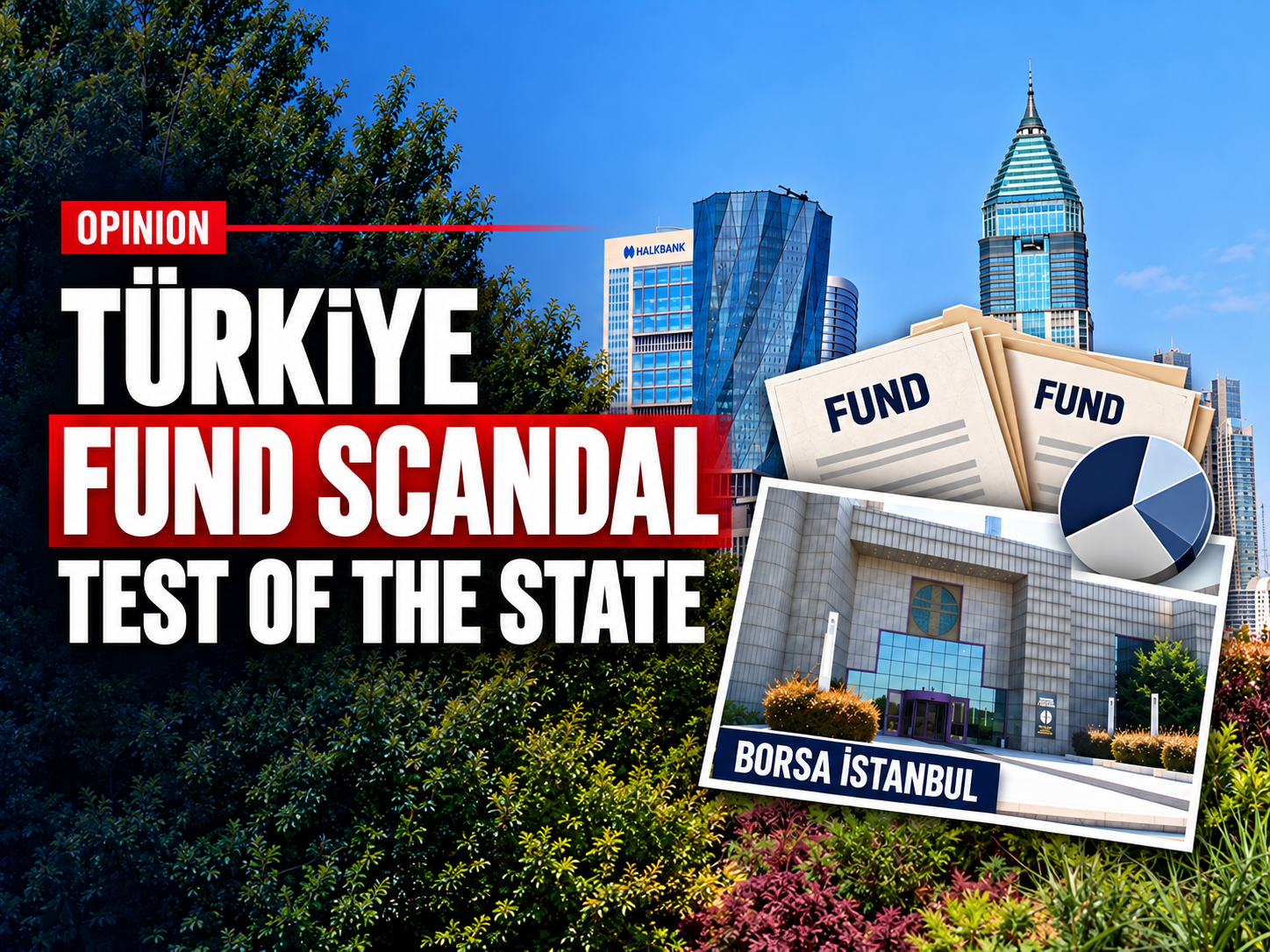
Financial scandals rarely remain confined to balance sheets. When political figures, regulators and hundreds of thousands of ordinary investors become part of the same story, the central question changes. It is no longer simply who made money and who lost it. The real question becomes whether the institutions responsible for protecting the public can investigate the powerful as seriously as they investigate everyone else.
Türkiye's investment fund crisis has reached precisely that point.
The scale of the failure
Regulators ordered the liquidation of 131 funds managed by seven asset management companies after some funds struggled to meet redemption requests. According to Reuters, the funds held more than 18 billion dollars and affected about 455,000 investors. By early October, justice minister Akın Gürlek said 85 suspects had been arrested, and reports put the number at 217. Neither figure proves that every person under investigation committed an offence, but they show this was not a minor failure involving one careless manager.
The scandal developed in an economy where inflation and the lira's declining purchasing power encouraged savers to seek returns that could preserve their wealth. Some funds became heavily concentrated in thinly traded companies whose share prices could rise dramatically when large amounts of money entered the market. One fund, Tera's hedge fund, reportedly produced a cumulative return of more than 15,000 percent in lira terms before the crisis.
Warnings that came early
Such gains should have triggered intense scrutiny. In fact, Finance Minister Mehmet Şimşek said in November 2025, "We know that these manipulations are being carried out particularly through certain funds," and promised to address regulatory gaps. The Capital Markets Board, known as the SPK, also said in September that it had seen unusual price moves in low float stocks since late 2025. Yet the board's tighter limits on fund holdings in low float shares did not arrive until August 28, 2026, shortly before the system began to unravel.
This timeline matters because it suggests that Türkiye is confronting more than individual wrongdoing. It is also confronting a failure of supervision.
What the government did well
The government's operational response should nevertheless be recognized. The central bank said on September 17 that it would expand repo funding, lower collateral haircuts and adjust lenders' interbank borrowing limits, and that it stood ready to intervene further if stress emerged. The SPK ordered the liquidation of the affected funds, and prosecutors opened criminal investigations into suspected manipulation, fraud and illicit transfers. AK Parti spokesman Ömer Çelik said on September 27 that the financial system faced no systemic risk. Investors with net holdings below one million lira are due full repayment under the liquidation arrangements, according to reporting.
These measures are important. A disorderly liquidation could have spread losses across the banking system and intensified public panic. Preventing contagion is a legitimate responsibility of the state, not, by itself, evidence of an improper bailout.
But containing a financial crisis is different from restoring trust.
The political dimension
The political dimension became unavoidable when Fatma Betül Sayan Kaya, a former minister and AK Parti deputy chair, resigned from her party positions after the opposition alleged that she and her husband had bought about 163 million lira of shares in Özata Denizcilik in April and sold them for about 2.17 billion lira before the mid-September sell-off. She said she was accepting political responsibility while the claims were examined. She and her husband, İlyas Kaya, were questioned as suspects on October 7. Kaya has said she received no guidance or privileged information, and that the proceeds were moved to an account designated for the Savings Deposit Insurance Fund. They have not been convicted of wrongdoing, and that distinction must remain clear.
Her resignation was appropriate, but resignation cannot replace explanation. The public deserves to know when the shares were purchased, how the investment decision was made, when they were sold, whether nonpublic information was available and whether any official relationship created a conflict of interest. Those questions should be answered through evidence and due process, not partisan speculation.
Accountability promised, scrutiny punished
Çelik wrote on September 27 that “those who did wrong will answer for it before the law” (“Yanlış yapanlar, hukuk önünde hesabını verecektir”). That is the correct principle. Its credibility, however, will depend on whether the investigation follows financial evidence wherever it leads, including toward people with political access.
This is where the government's response begins to look contradictory. On one side, officials promise accountability and regulators pursue suspects. On the other, AK Parti Secretary General Eyyüp Kadir İnan has accused the opposition and the media of a "web of lies" and said the party would hold critics legally accountable. Trade Minister Ömer Bolat and Family and Social Services Minister Mahinur Özdemir Göktaş, both of whom deny wrongdoing, have filed criminal complaints over allegations about them.
Most troubling, two journalists have been jailed pending trial over alleged misinformation connected with the scandal. Mustafa Balcı, an editor at Sözcü, and Şaban Sevinç, editor-in-chief of Bizim TV, face a charge of publicly disseminating misleading information. Two others, İsmail Saymaz and Murat Ağırel, were first released with travel bans, then ordered held under house arrest after prosecutors challenged that decision. The disputed reporting included a photograph and claims linking Çelik to Osman Arıkan Nacar, a suspect in the fund investigation, at a concert in Bodrum on August 22. Balcı has said he did not spread false information, that the photo had been published before and that his post described the claims as allegations.
The pattern is not new. İsmail Arı, a reporter for the daily BirGün, was arrested on March 22 after remarks on a television program and social media posts alleging the Erdoğan family's role in managing 20 foundations that received public funds, as well as corruption allegations at the Yunus Emre Institute and irregularities in judicial appointments. Prosecutors accused him of "publicly disseminating misleading information" and violating confidentiality. He spent 75 days in pretrial detention before the Ankara 2nd Criminal Court of First Instance ordered his release on June 5 at his first hearing, and he still faces trial. In 2023, Tolga Şardan of the news site T24 was jailed for about five days after publishing an article about a reported intelligence agency report on corruption in the judiciary; the Centre for Combating Disinformation denied that such a report existed. In April 2026, an Istanbul court acquitted him of spreading false information but sentenced him to five months, deferred, for "denigrating the state's judicial organs." The Committee to Protect Journalists counted 16 arrests and detentions under the disinformation law in 2026 through early September, and its Turkish representative, Özgür Öğret, said the law "was designed to be a one-size-fits-all tool to prosecute journalists."
Misinformation can cause genuine harm during a financial crisis. False claims can intensify a market run, destroy reputations and encourage investors to make decisions based on fabricated evidence. Journalists therefore have a responsibility to verify documents, disclose uncertainty, and promptly correct errors.
But the government has a greater responsibility not to use "misinformation" as a shield against legitimate scrutiny. The answer to questionable reporting should ordinarily be evidence, correction and transparent access to information. Pretrial detention risks creating the impression that the state is more determined to control discussion of the scandal than to explain how it became possible.
Why investors are watching
That impression carries consequences far beyond domestic politics. International investors do not expect every country to be free of fraud. Market manipulation, insider trading and fund failures occur in advanced economies as well as emerging markets. Investors judge countries by what happens after misconduct is discovered: whether regulators acted independently, whether politically connected individuals received preferential treatment, whether courts worked transparently and whether the rules were applied consistently.
Even before the crisis, MSCI's June 2026 market classification review recorded investor concerns about "possible coordinated trading behaviour" and distorted free float estimates in Türkiye, and said it may open a consultation on how to treat Türkiye and its securities if it does not see "tangible and credible progress" by its November 2026 index review. S&P Dow Jones Indices has also raised concerns about market transparency.
Türkiye has spent years promoting Istanbul as an international financial centre and presenting itself as a destination for investment from Europe, the Gulf and Asia. Infrastructure, tax incentives, and promotional campaigns alone cannot sustain that ambition. Financial centres ultimately depend on confidence that published prices are real, regulators are independent, and political connections do not provide privileged exits from collapsing investments.
Country reputation is therefore not a public relations problem. It is an institutional outcome.
What Ankara should do
If Ankara wants to protect Türkiye's image, it should publish a detailed regulatory timeline explaining what officials knew and when they knew it. Parliament should conduct a transparent inquiry with testimony from the SPK, fund managers, auditors and government officials. Politicians and senior public officials connected to the affected investments should disclose relevant transactions and potential conflicts. Regulatory leadership and enforcement decisions should also be independently reviewed.
Most importantly, courts must establish criminal responsibility based on evidence. Arrest numbers should not be presented as proof that the problem has been solved. A large investigation can demonstrate determination, but only fair trials, transparent findings and equal treatment demonstrate justice.
The choice
The AK Parti government still has an opportunity to turn the scandal into evidence that Türkiye's institutions can correct serious failures. The emergency financial response shows that the state possesses the technical capacity to contain the immediate danger. What remains uncertain is whether it possesses the political willingness to expose how the crisis developed and hold every responsible actor to the same standard.
That is the choice Ankara faces now. It can treat the fund scandal as an attack on the government and try to manage the narrative, or treat it as a warning that markets cannot function without independent oversight, open journalism, and public accountability.
The first approach may temporarily reduce political discomfort. Only the second can restore Türkiye's reputation.
Comments
Join the conversation
Enter your email — we'll send a 6-digit code so you can post a comment. No password needed.
- Be the first to comment.