
Analysis: China Is Not Replacing the United States in the Middle East, but Egypt Shows the Region Is Making Room for Beijing
Xi Jinping’s first Egypt visit in a decade produced defence exercises, a renewed currency swap, and a striking Chinese concession on the Nile. None of it means Cairo is choosing sides.
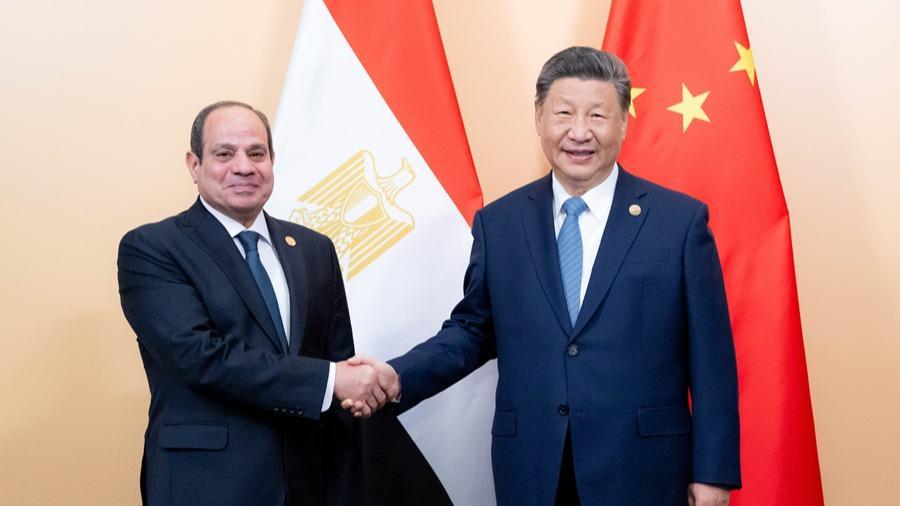
Chinese President Xi Jinping’s visit to Cairo on September 1 and 2, his first in a decade, has already been covered as news. The more useful question, five days later, is what kind of relationship it actually reveals, and the honest answer is more interesting than either a replacement or a routine visit.
A visit timed for maximum signal
The timing was not incidental. Xi arrived in Cairo directly from a two-day Shanghai Cooperation Organization summit, and the visit landed as the US-Israel war with Iran continues disrupting shipping through the Strait of Hormuz and unsettling security assumptions across the region. Reuters and Al Jazeera both framed the visit as part of a deliberate Chinese effort to expand Middle East influence at a moment when regional governments are actively reassessing their security relationships, a reassessment also visible in the Mecca Joint Deterrence Agreement Pakistan, Saudi Arabia and Turkiye announced in the same period. Xi used the platform directly. He called on Middle East countries to oppose external interference and consider reshaping the region’s security order, remarks Al Jazeera reported were aimed squarely at the security vacuum the Iran conflict has exposed.
What was actually signed, beyond the ceremony
The substance went well beyond a ceremonial anniversary marking 70 years of diplomatic ties. Sisi’s office confirmed the two countries signed an agreement launching the third phase of the Egyptian Chinese industrial zone at the Suez Canal, an area already hosting roughly 200 companies and about 4 billion dollars in investment, according to Al Jazeera. The joint communique, published by Egypt’s State Information Service, calls for deeper cooperation across renewable energy, artificial intelligence, digital transformation, electric vehicles, shipbuilding, semiconductors and critical minerals, and the two sides agreed to renew and expand their currency swap arrangement. A military track ran alongside the diplomacy: Chinese and Egyptian air forces have been conducting the Eagles of Civilization 2026 joint exercise since August 22, including Chinese aircraft refuelling Egyptian jets mid-air, according to The National. Bilateral trade reached 20.8 billion dollars in 2025, heavily skewed toward Chinese exports, with Cairo targeting more than 25 billion dollars by year’s end, and officials are reportedly discussing converting a portion of Egypt’s Chinese debt into direct investment stakes. This mechanism would ease pressure on Cairo’s foreign currency reserves without requiring new borrowing.
The detail most coverage missed
The most analytically interesting outcome of the visit was not on most news outlets’ lists. According to the Carnegie Endowment’s own analysis of the joint communique, Egypt renewed its longstanding commitment to the One China principle, as expected. In return, Xi committed China to recognizing Egypt’s water security and rights to Nile resources. Carnegie’s analysts note this matters because Beijing has generally been perceived as favouring Ethiopia’s position in the long-running dispute over the Grand Ethiopian Renaissance Dam and equitable distribution of Nile waters. A shift in China’s diplomatic posture on that specific question gives Cairo something concrete to work with in future negotiations with Addis Ababa, and it is a far more consequential outcome, in narrow diplomatic terms, than another round of technology and infrastructure pledges.
Why Carnegie’s own framing supports rather than undercuts the room to manoeuvre argument
Carnegie’s analysts, writing independently of this piece, concluded worth stating precisely because it is easy to misread: despite the heavy diplomatic symbolism of the visit, both Egypt and China remain invested in their other major partnerships, globally for Cairo and regionally for Beijing, and deepening the Egypt-China partnership does not mean Cairo is giving up its strategic relationship with the United States. That is not a hedge inserted to soften the story. It is the same structural point Sisi has made himself publicly, describing Egypt’s posture as one of strategic balance rather than a choice between Washington and Beijing, and it is consistent with Egyptian officials’ own description of the approach as an independent foreign policy rather than a pivot away from any single partner.
What this means beyond Egypt
The more useful frame, then, is not whether China is replacing the United States in the Middle East. On the specific evidence of this visit, it plainly is not: Egypt remains a major recipient of US military assistance and a central partner in regional security arrangements Washington still leads. What is changing is the amount of room regional states are creating for Beijing to operate in alongside those existing relationships, room that expands specifically when the incumbent security guarantor’s own reliability looks less certain, as it currently does amid the Iran conflict’s disruption to Gulf shipping and regional security assumptions. Egypt is a particularly clean test case precisely because Cairo has strong, structural reasons to keep Washington close, a large US assistance relationship, extensive security cooperation, and continued dependence on Suez Canal transit revenue that a genuine break with the West would jeopardize. Yet it is still visibly deepening its relationship with Beijing through defence exercises, industrial investment, and now a diplomatically significant concession on the Nile. If a state with as many structural reasons to stay close to Washington as Egypt has is nonetheless deepening its Beijing relationship this substantially, that says more about how much room the current moment has opened up than any single joint communique could on its own.
Comments
Join the conversation
Enter your email — we'll send a 6-digit code so you can post a comment. No password needed.
- Be the first to comment.