Analysis: The Mecca Pact Signals a Region Learning to Hedge Its Own Security
The Turkiye Saudi Arabia Pakistan defence pact says as much about the limits of old alliances as it does about the ambitions of new ones.
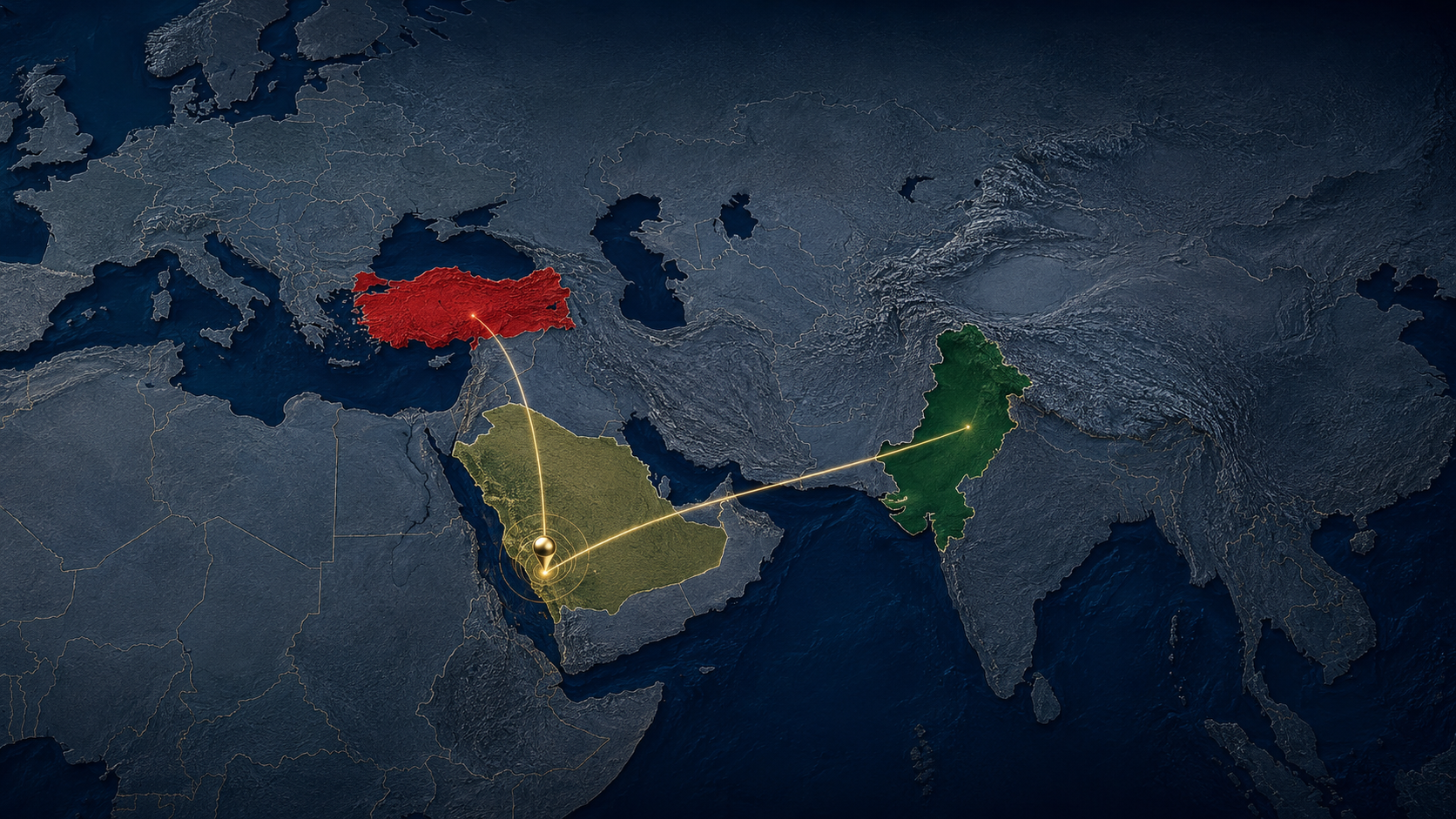
The defence agreement signed this week in Mecca by Turkiye, Saudi Arabia and Pakistan deserves attention well beyond the Middle East, because it says as much about the limits of old alliances as it does about the ambitions of new ones.
For decades, Gulf security rested on an implicit bargain: Washington provided a protective umbrella, and in exchange, Gulf states aligned themselves with American strategic interests. That bargain has been visibly fraying since the United States and Israel struck Iran in February, an escalation that instead of stabilizing the region has invited a wave of retaliatory attacks on Gulf shipping and energy infrastructure. Riyadh’s decision to formalize a mutual defence pact with Ankara and Islamabad, rather than simply lean harder on Washington, is a signal that Gulf capitals are actively diversifying their security guarantees.
What makes the Mecca agreement notable is not just that it happened, but who signed it. Turkiye brings a rapidly maturing defence industrial base and NATO’s second largest army. Pakistan brings a nuclear deterrent and decades of military experience. Saudi Arabia brings capital and religious legitimacy as custodian of Islam’s holiest sites. Individually, each state has real limits on what it can project. Together, the combination is harder to dismiss.
None of this means the agreement replaces American security guarantees overnight, nor does it resolve the underlying conflict driving the current instability. Its practical military commitments remain to be spelled out in future protocols, and framework agreements often take years to translate into operational capability.
But the broader pattern is worth watching closely, particularly for countries like Canada that are themselves rethinking old trade and security dependencies. A world in which middle powers increasingly hedge their alliances, rather than relying on a single guarantor, is a more multipolar and less predictable one. For Ottawa, engaging seriously with Ankara is not simply a matter of diversifying trade. It is a recognition that the assumptions underpinning the postwar security order are being renegotiated in real time.
Comments
Join the conversation
Enter your email — we'll send a 6-digit code so you can post a comment. No password needed.
- Be the first to comment.