
In Modern War, Food Systems Are Part of the Battlefield
Guterres told the Security Council that 2025 saw the highest number of armed conflicts since the Second World War alongside record hunger. His proposed circuit breakers deserve to become a real diplomatic tool, not just a phrase in a speech.
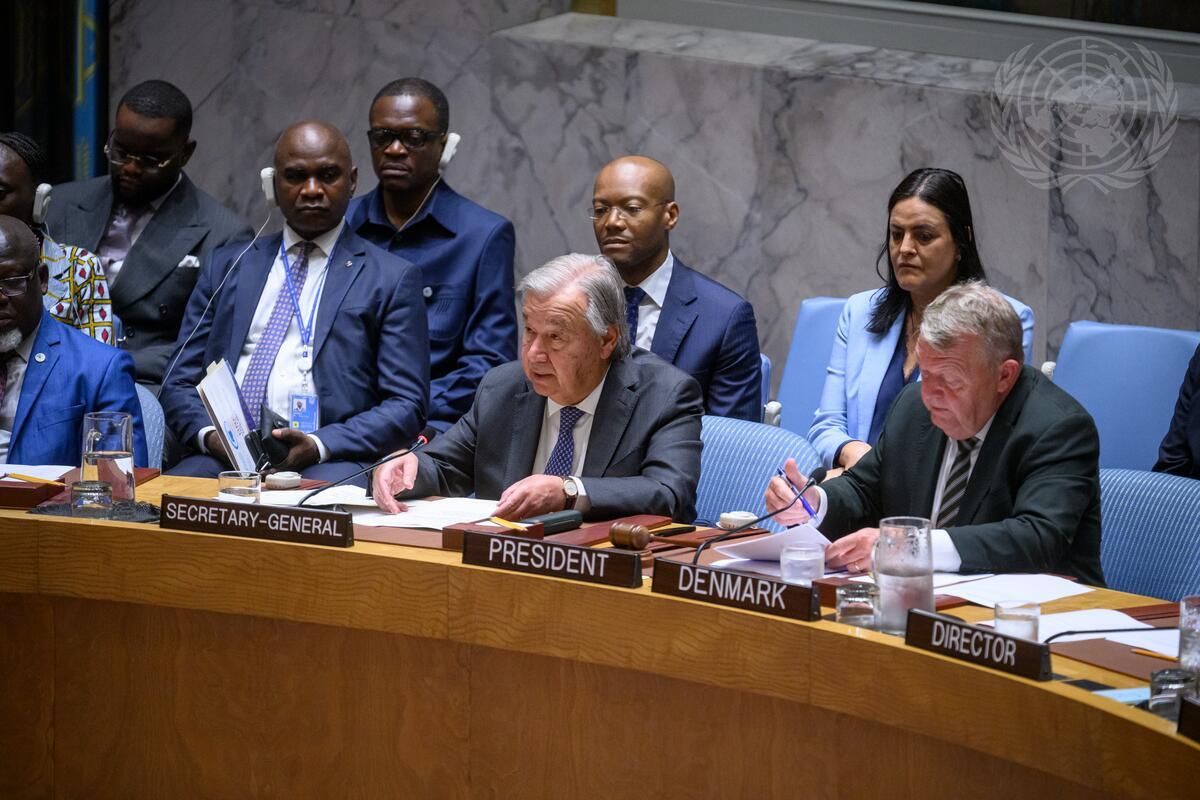
Secretary General Antonio Guterres told the UN Security Council on August 25 that critical food systems, and the lives and livelihoods they sustain, are under attack around the world. The context he gave is genuinely alarming: 2025 recorded the highest number of armed conflicts since the Second World War, alongside some of the highest levels of acute hunger on record, and for the first time this century, two famines, in Sudan and Gaza, were confirmed simultaneously.
A tanker in one sea, an empty plate in another
The most striking part of Guterres's address, chaired by Denmark's Foreign Minister Lars Løkke Rasmussen, was his insistence that hunger's geography no longer matches conflict's geography. An oil tanker anchored in the Strait of Hormuz can mean one less meal a day for a child in Sudan, Guterres said, because all food systems ultimately depend on fuel. He pointed to Houthi attacks on shipping in the Bab el Mandeb Strait hitting import-dependent Yemen especially hard, and to escalating Black Sea attacks threatening Somalia, which imports 90 percent of its cereals. The Strait of Hormuz alone carries a fifth of global oil supply and a third of global fertilizer trade, according to Guterres, meaning disruptions there raise farming costs for import-dependent, often heavily indebted countries thousands of miles from any front line.
A resolution with teeth still to use
The Security Council has not been silent on this connection. Resolution 2417, adopted in 2018, explicitly recognized the link between conflict-driven food insecurity and famine and directed parties to avoid harming the infrastructure food systems depend on. Wednesday's session, a signature event of Denmark's Council presidency, was framed as an effort to strengthen implementation of that resolution rather than draft a new one, with the World Food Programme's acting executive director Carl Skau briefing alongside Guterres. The crisis's persistence eight years after the resolution's adoption suggests the gap has never really been a lack of legal authority. It has been a gap in political will to invoke it early, before famine is already underway.
The case for circuit breakers
Guterres's own proposed remedy is worth taking seriously on its own terms: what he called circuit breakers, mechanisms specifically designed to stop conflict in one region from generating hunger in another. Waiting for famine to be declared is a total failure of duty, he told the Council, arguing that the Council should act while, in his words, the warning lights are flashing, rather than after a famine designation makes the crisis undeniable. This is not a call for new humanitarian sentiment so much as a specific institutional proposal: linking early warning systems already available under resolution 2417 to concrete, fast, prevention oriented Council action on shipping routes, fertilizer supply chains and agricultural seasons before they are lost, according to the concept note prepared by Denmark ahead of the debate.
Making food part of ceasefire terms
The practical argument that follows is that protecting food infrastructure should become a measurable, negotiated part of ceasefire diplomacy rather than an afterthought addressed only through separate humanitarian channels. Concretely, this could mean explicit ceasefire provisions protecting agricultural seasons, guaranteed safe-passage corridors for fertilizer and grain shipments through contested waterways, and Council-level triggers tied to specific supply-chain disruptions rather than only to confirmed famine. Consumer countries whose energy and technology ambitions depend on stable global trade routes also have a direct stake in this. A world where regional conflicts routinely export hunger to uninvolved, debt-burdened countries is not stable for anyone relying on predictable global supply chains, food, fuel, or otherwise.
None of this should collapse into a single, simple accusation. The UN's hunger figures- 266 million people facing acute food insecurity in 2025, conflict identified as the primary driver in 12 of 13 major hunger hotspots are the organization's own documented findings. Whether any specific party to a given conflict is deliberately using starvation as a weapon of war is a separate, conflict-specific legal question requiring its own evidence, and drought, economic collapse and interrupted aid access remain real, independent contributors to hunger in many of the same places. The strength of Guterres's argument is not that conflict explains everything. It is that global food systems are now interconnected enough that a war fought nowhere near a farm can still decide whether that farm's harvest reaches a plate.
Comments
Join the conversation
Enter your email — we'll send a 6-digit code so you can post a comment. No password needed.
- Be the first to comment.