
Analysis: Carney’s Hardest Trade Partner Might Not Be Washington
With six days left before the tariff deadline, the prime minister is negotiating on two fronts at once, one with the United States and one with his own federation.
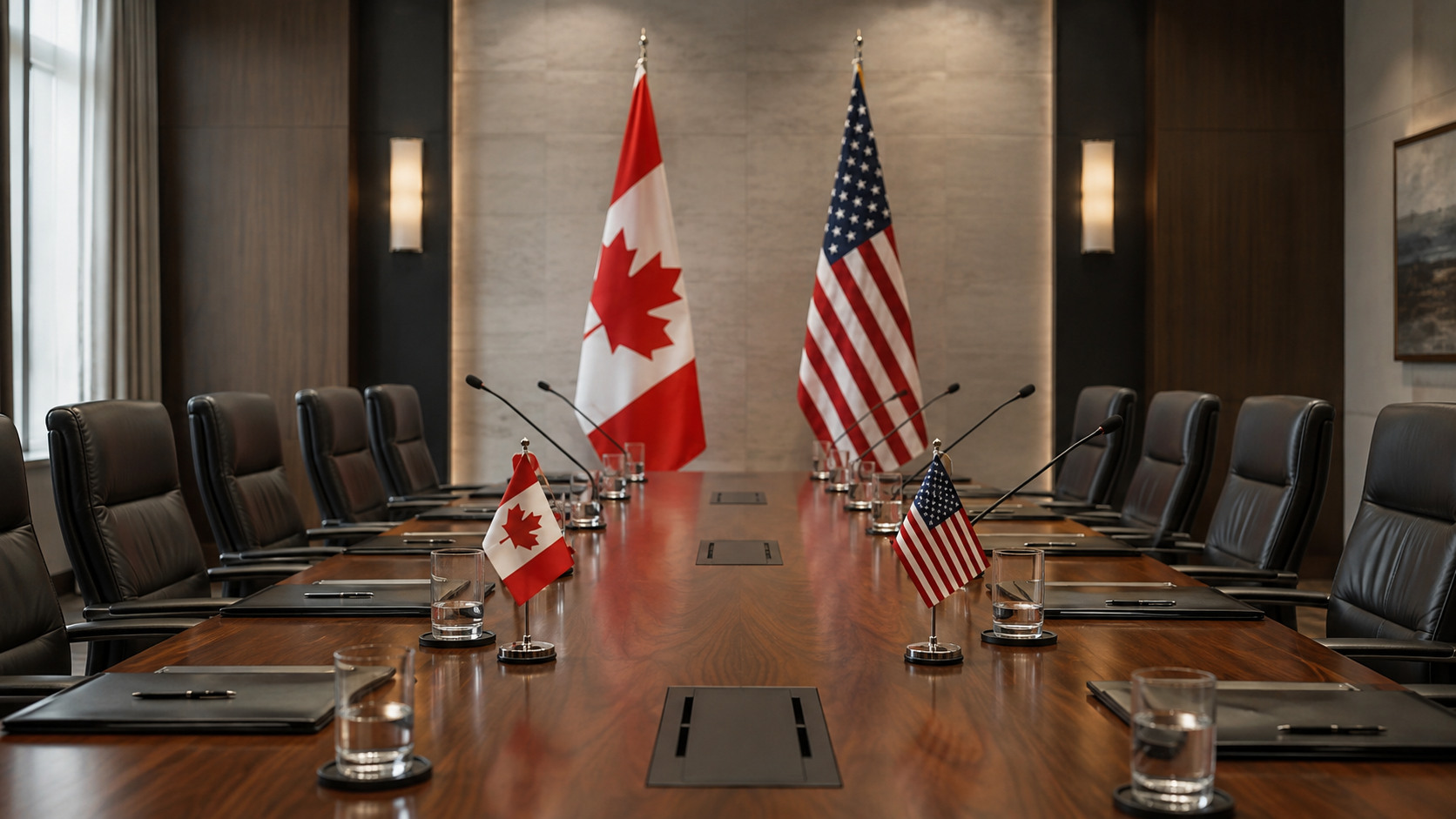
Six days before fifty percent tariffs hit a wide swath of Canadian exports, the most interesting tension in Ottawa’s trade strategy is not really between Canada and the United States. It is between Ottawa and the provinces.
Mark Carney has been remarkably consistent on the substance: no deal is better than a bad one. That line has held since before he took office, and it has largely defined how his government has approached months of on again, off again talks with the Trump administration. What has shifted is the political terrain underneath it. Doug Ford wants a tough posture aimed squarely at the optics of the coming US midterms. Christine Frechette wants relief on aluminum without trading away dairy, and has signalled she would lift Quebec’s alcohol ban only in exchange for gains elsewhere. Both premiers are, in their own ways, negotiating on Carney’s behalf and constraining him at the same time.
That is not a new feature of Canadian trade policy, but it is an unusually visible one right now, largely because the alcohol bans sit entirely within provincial jurisdiction. Ottawa cannot simply instruct Ontario or Quebec to lift them as a bargaining chip; it has to build a deal palatable enough that premiers choose to lift them on their own. Goldy Hyder’s framing, that this underscores the difficulty of governing as a federation, understates how much leverage that gives individual provinces over the shape of a national trade agreement.
The economic stakes make the balancing act harder still. A council estimate putting the cost of a full breakdown at roughly 102,000 jobs is the kind of number that makes patience expensive, and it is fair to ask whether Carney’s steady public tone can hold if that estimate starts looking conservative. But there is also a case, made by commentators sympathetic to his approach, that the appearance of Canadian anxiety plays directly into Washington’s hand: a negotiating partner that looks desperate rarely gets a better deal by looking that way.
What is worth watching over the next six days is not just whether Washington moves on Section 232 tariffs, but whether Ottawa can keep Ontario, Quebec, and the rest of the federation rowing in roughly the same direction long enough to get there. A trade deal that satisfies Washington but fractures provincial buy in would be, in its own way, exactly the kind of bad deal Carney says he is trying to avoid.
Comments
Join the conversation
Enter your email — we'll send a 6-digit code so you can post a comment. No password needed.
- Be the first to comment.