Beyond the Ceremony: What a Stronger Canada and Türkiye Partnership Must Deliver
A new strategic partnership opens real possibilities for trade and security, but its worth will depend on commitments that can be checked, oversight that is public and honesty about disagreements.
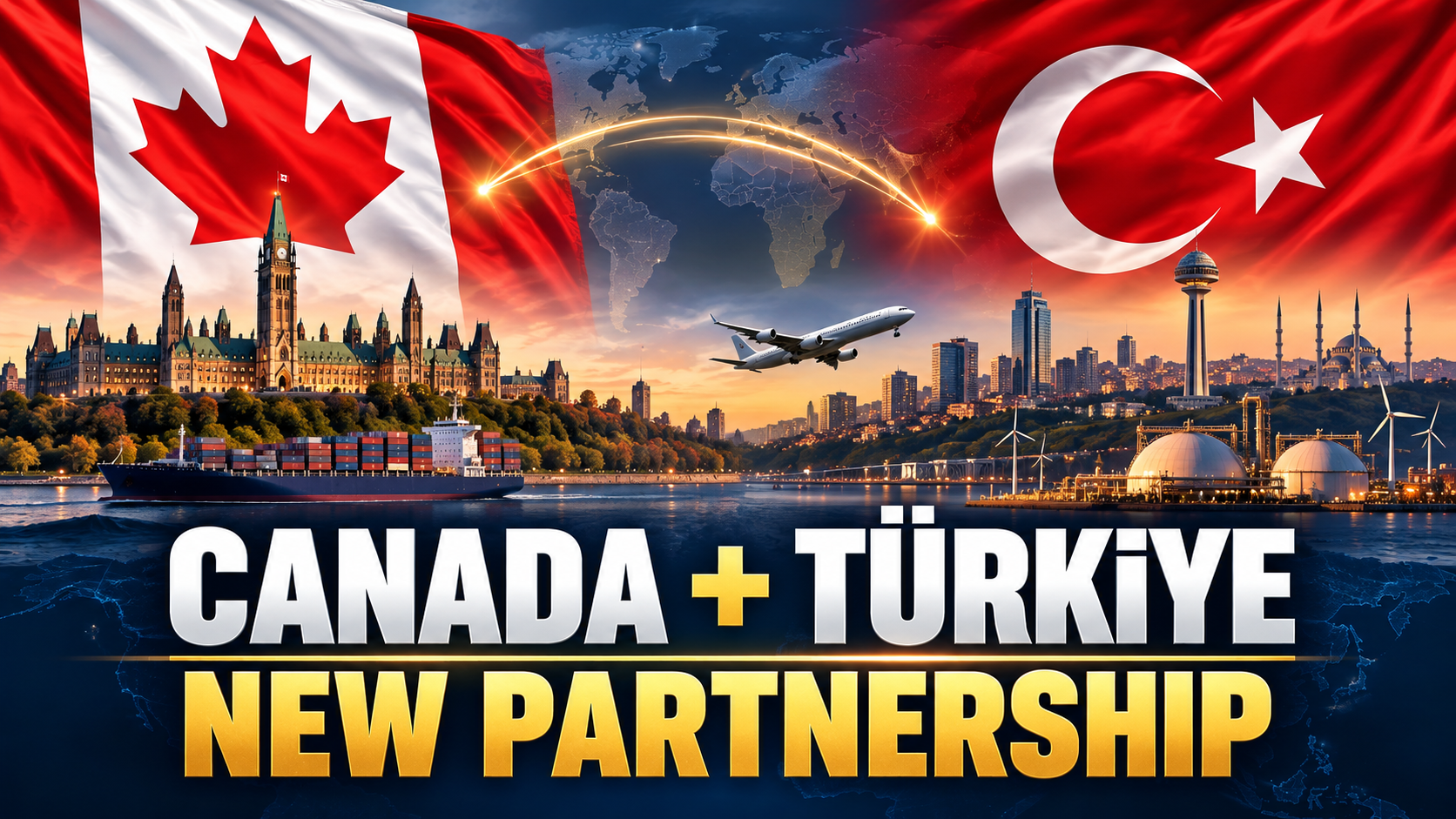
When President Recep Tayyip Erdoğan said this week that Canada and Türkiye had "overcome the disconnect that had persisted" between them for many years, he named a real problem. Two NATO allies had drifted apart, and Canada blocked military exports to Türkiye for nearly three years. Ending the silence was the easy part.
Prime Minister Mark Carney's visit to Ankara produced a three year action plan, an expanded air transport agreement and a promise of free trade talks. Those are useful steps. They are not a trade agreement, a finished investment or a lasting consensus, and the gap between a framework and a result is where partnerships succeed or fail.
The case for engagement
The economic argument is straightforward. Canada wants more markets beyond the United States at a time of trade conflict with Washington. Türkiye has a large industrial base, a position between European and Asian markets and a growing appetite for energy and technology. The joint statement points to nuclear power, liquefied natural gas, critical minerals, aerospace and defence production as areas for cooperation.
But announcements are cheap. The first round of free trade talks won't begin until next month, and the air transport agreement still needs ratification. Erdoğan's trade goals, reported variously as 5 billion and 10 billion dollars, are ambitions, not commitments. Ottawa should publish its negotiating objectives, report progress honestly and explain to workers and businesses what an agreement would mean for jobs, prices and standards.
Defence needs daylight
Defence cooperation is the harder test. Canada blocked military exports to Türkiye in 2021 after Canadian drone technology turned up in the fighting between Azerbaijan and Armenia, then reopened the door in January 2024 with case by case reviews. A new defence industry memorandum now invites deeper links between companies in both countries. If Canadian firms are going to sell into that market, the review process should be clear, the decisions explainable and Parliament able to ask questions.
Rights are not a side issue
Human rights belong in the conversation too. The joint statement says both countries share a commitment to human rights, individual liberties, democracy and the rule of law. Amnesty International has urged Carney to speak about what it describes as a deepening rights crisis in Türkiye, and the readout of his meeting does not mention the subject. The Prime Minister's Office says Foreign Affairs Minister Anita Anand raised it with her Turkish counterpart, which is a start.
Canada can pursue trade while maintaining its standards on free expression, due process, and political participation. Doing both is not naive. It is what allies who trust each other are supposed to be able to do.
People, not only governments
The relationship also lives outside the summit room. Turkish Canadians, students, researchers and business owners connect the two countries every day. The joint statement promises work on consular services, travel and cultural exchange. Those measures can outlast a single government or a single visit, and they deserve as much attention as the trade headlines.
The best test of the Ankara announcement is what follows: open negotiations, credible investment, responsible security cooperation, and a willingness to discuss disagreements publicly. A partnership earns its name when results can be measured against its promises.
Comments
Join the conversation
Enter your email — we'll send a 6-digit code so you can post a comment. No password needed.
- Be the first to comment.