
Analysis: Can China Replace the United States as the World’s Superpower, or Is the Question Already Outdated
Serious analysts disagree sharply on whether the world is becoming bipolar, multipolar, or something in between. What is not in dispute is that a growing number of middle powers no longer wait for Washington’s or Beijing’s permission to act.
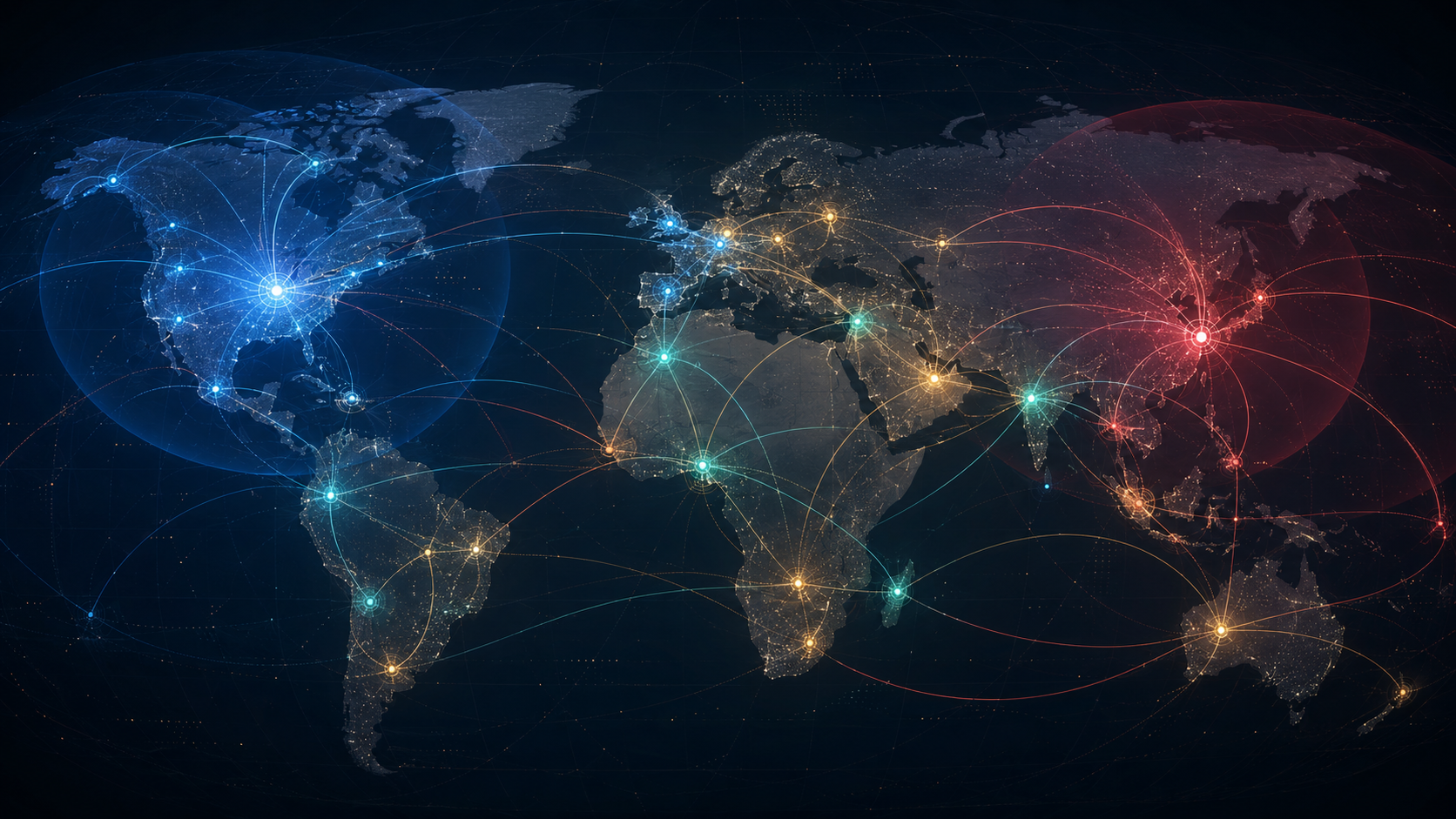
Ask five serious analysts whether China can replace the United States as the world’s dominant power, and there is a real chance you get five different answers, not because the question is unanswerable, but because it may be the wrong question.
The case for an already bipolar world
Some scholars argue the catching up framing itself misses the point. In a widely discussed Foreign Affairs analysis, one influential formulation holds that China is not merely a rising power but has already crossed the threshold into superpower status, more powerful by several measures than the Soviet Union ever was at the height of the Cold War, even though it has not overtaken the United States outright. On this view, the world is already bipolar in practice: middle powers are influential within their own regions, but only Washington and Beijing exceed the great power threshold globally, a dynamic said to explain everything from intensified technology export controls to the size of recent US arms packages to Taiwan. A related Brookings analysis goes further, arguing it is already obsolete to call China a rising power at all, and warning that the United States no longer enjoys anything like the overwhelming advantage it held over a battered Soviet Union at the start of the original Cold War, since a quarter century of continuous American military engagement abroad has left US forces comparatively more strained than China’s.
The case for enduring American primacy
Other analysts push back hard on any narrative of American decline. One frequently cited comparison points to nominal GDP, the measure many economists consider most relevant to a state’s ability to project power through trade, investment and sanctions, where the IMF’s 2026 projections put the US economy at roughly 32.4 trillion dollars against China’s approximately 20.9 trillion, a gap of more than fifty percent. The US dollar’s continued dominance reinforces this argument: it accounted for roughly 57 percent of global foreign exchange reserves in early 2026 against the yuan’s roughly 2 percent, according to IMF reserve composition data, a gap that has narrowed only marginally in recent years despite years of discussion about de dollarization. Demographic projections cited in this camp also favour the United States, whose population is projected to keep growing through 2050, unlike China’s, which is already shrinking. Even analysts who see China’s rise as structurally significant, such as those applying power transition theory and neorealist frameworks in recent academic work, tend to describe the rivalry as a decades long structural competition rather than an imminent handover of the top position, with flashpoints like Taiwan and technology carrying real escalation risk precisely because neither side has definitively won.
What both camps tend to agree on
Despite their disagreement over who leads, analysts across this debate largely agree the US China relationship has become what one defense focused analysis called a superpower stalemate: both governments have stopped expecting the other to accommodate their core interests, treating confrontation as a routine policy tool rather than a failure of diplomacy. A separate line of analysis frames the two economies as codependent superpowers, noting that America’s large external deficits and China’s large surpluses reflect deep structural imbalances that tariffs alone have not resolved, since the imbalance stems from how much each economy consumes versus saves, not simply from trade policy.
The middle powers are not waiting
What often gets lost in a strictly bilateral framing is a broader shift already underway beneath the US China rivalry. The Institute for Economics and Peace’s January 2026 report, The Great Fragmentation, found that global geopolitical fragmentation now exceeds Cold War levels, that traditional superpower influence has plateaued since roughly 2015, and that the number of genuine middle power states has nearly doubled, from nine in 1991 to sixteen today, with the UAE, Turkiye and Indonesia specifically identified as leading this rise. The same report identifies India as an outlier among great and middle powers alike: the only major power whose overall global influence continues to expand rather than plateau, a status the report explicitly frames as India transitioning from a rising middle power into what it calls a future defining great power in its own right. Indonesia has leveraged its position as source of over half the world’s nickel mine production to embed itself in global electric vehicle supply chains, while Gulf states including Saudi Arabia and the UAE are increasingly anchoring their security within what one regional analysis calls multi aligned webs rather than depending solely on Western guarantees, illustrated by the late 2025 Saudi Pakistan defence pact.
An honest answer to a loaded question
The honest answer to whether China can replace the United States is that the question assumes a single, transferable title that the current international system may no longer produce. Even analysts convinced China has already reached superpower status generally frame the outcome as an enduring rivalry rather than a clean succession, and the middle power evidence suggests real agency is increasingly distributed well beyond either capital. Turkiye’s use of Mediterranean and Caucasus transit routes to reduce dependence on any single chokepoint, India’s simultaneous participation in US led critical minerals initiatives and continued strategic autonomy from Washington, and Gulf states hedging between American, Chinese and their own defence partnerships all point toward a system that rewards flexibility over allegiance to either pole. What is genuinely uncertain, and worth watching rather than predicting, is whether that flexibility proves durable once a real crisis, over Taiwan, the Gulf, or elsewhere, forces middle powers to choose more starkly than they have needed to so far.
Comments
Join the conversation
Enter your email — we'll send a 6-digit code so you can post a comment. No password needed.
- Be the first to comment.