What Bill 9 Actually Does to Charter Rights, in the Words of the Groups Fighting It
The Canadian Civil Liberties Association calls Bill 9 an override of fundamental rights. The National Council of Canadian Muslims has spent nine years building the legal record now aimed at Quebec's secularism laws. Here is the case they are making.
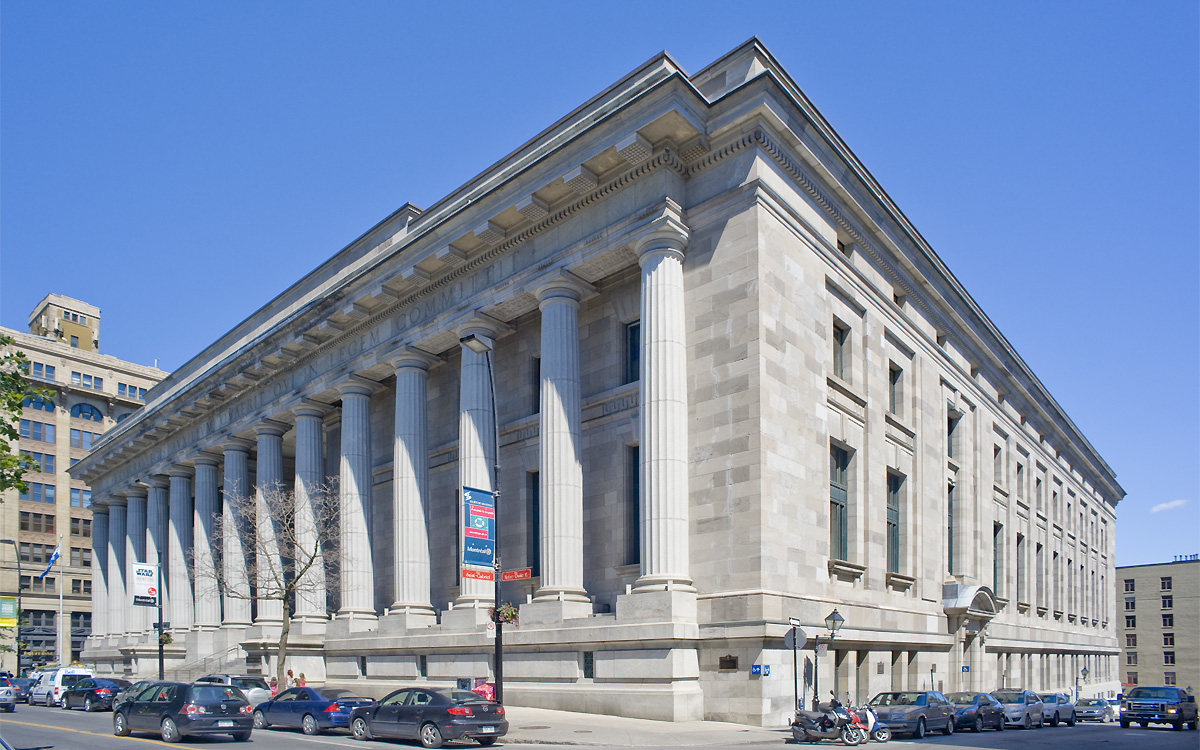
When the Canadian Civil Liberties Association responded to Bill 9's passage in April, it did not hedge. The passage of Bill 9 is another example of the Quebec government's ongoing attack on freedom of religion, freedom of expression, protest rights, and equality, the organization said in a statement, adding that by once again invoking the notwithstanding clause, the government has set a dangerous precedent for the erosion of constitutional protections for Quebecers.
Which rights are actually at stake
The CCLA's language points to a specific set of Charter guarantees, not a vague sense of unfairness. Anais Bussieres McNicoll, director of the organization's Fundamental Freedoms Program, was direct about the scope when the bill was first tabled. In a clear and alarming infringement of freedom of religion, expression, peaceful assembly and equality, this sweeping piece of legislation almost completely prohibits collective religious practice in public, she said.
Bussieres McNicoll's framing tracks directly onto sections 2 and 15 of the Canadian Charter of Rights and Freedoms, freedom of conscience and religion, freedom of expression, and freedom of peaceful assembly under section 2, and the right to equal protection and equal benefit of the law without discrimination under section 15. Those are precisely the sections a law restricting where and how people may pray, and requiring municipal permission for group prayer in public parks, would ordinarily be tested against.
Why the usual court challenge is not available
That ordinary test is largely unavailable here, and this is the mechanism at the centre of the CCLA's strongest objection. Quebec invoked section 33 of the Charter, the notwithstanding clause, preemptively when passing Bill 9, following the same approach it used for Bill 21 in 2019. Section 33 allows a legislature to shield a law from judicial review under section 2 and sections 7 through 15 of the Charter for a renewable five-year period, meaning the courts cannot strike down Bill 9 based on the very freedoms the CCLA says it violates, unless a challenge can be built on Charter provisions the notwithstanding clause does not cover, such as section 28's guarantee that Charter rights apply equally to men and women, or through Quebec's own provincial Charter.
That narrow path is not hypothetical. It is precisely the strategy the CCLA and NCCM used against Bill 21, filing a motion arguing the law was unconstitutional despite the notwithstanding clause. This case reached the Quebec Court of Appeal and is now before the Supreme Court of Canada. Bochra Manai, then NCCM's Quebec spokesperson, and CCLA lawyers including Noa Aviv built that case over years, and legal scholars have spent a comparable stretch of time debating, in academic journals, newspaper op eds and legal blogs, how far a notwithstanding-shielded law can still be reached through the sections the clause does not cover.
A pattern longer than one law
The organizations making these arguments about Bill 9 are not new to this fight. The CCLA and NCCM jointly challenged Quebec's Bill 62, the province's 2017 face covering law, and won a stay of its guidelines in 2018. They filed a joint factum against Bill 21 in the Quebec Court of Appeal in 2021. That nine-year record matters for how Bill 9 should be read. This is not a single advocacy group reacting to a single new law. It is the continuation of a legal and political campaign these organizations regard as addressing an escalating pattern, in which each successive law, Bill 62, then Bill 21, now Bill 9, has expanded both the range of restricted religious practice and the institutional settings covered.
Stephen Brown, the NCCM's chief executive, put the organization's underlying concern in blunt terms when Bill 9 was introduced. "There is something broken in our society," he told the Montreal Gazette. That is a stronger and more personal claim than a legal argument about section 2 or section 15. It reflects an assessment, from the organization representing many of the Canadians most directly affected by the law, that Quebec's approach to religious accommodation has moved beyond a policy disagreement into something the community experiences as a sustained institutional message about its place in public life.
The concern extends beyond one community
It is also worth being precise that the human rights case here is not exclusively about Muslim Quebecers, even though Muslim students and employees, whose faith requires prayer at fixed times during the day, are likely the group most immediately affected by the closure of dedicated prayer spaces. The municipality of Côte-Saint-Luc, home to a large Jewish population, has raised concerns that the law's restrictions on exclusive religious meal service affect the availability of kosher food. The Canadian Council of Christian Charities has intervened in a separate case addressing whether religious groups retain equal access to public spaces in Quebec. The CCLA's own framing, an attack on freedom of religion, expression, protest rights and equality, is deliberately general rather than community-specific, because the legal mechanism, a rule restricting religious practice as such rather than any one faith, applies the same restriction unevenly depending on how central visible, scheduled religious practice is to a given faith's daily observance.
The government's answer to this case
None of this human rights argument is unopposed, and it would be inaccurate to present it as though it were. Quebec's government has consistently defended Bill 9 as a legitimate exercise of state secularism rather than a rights violation, arguing, in Minister Jean Francois Roberge's own words, that religious practice will end in our public institutions because those institutions are not places of worship, and that anyone wishing to pray remains free to do so at home or at an actual place of worship. On that view, the law does not prohibit religious belief or practice as such, only its manifestation inside specific public institutions the government maintains should remain religiously neutral, a position with real support in Quebec's own political history since the Quiet Revolution and, according to Quebec government messaging, with broad public backing within the province.
What the coming months will decide
What happens next will likely run on two separate tracks that do not resolve each other. Politically, Quebec faces a provincial election no later than October 5, 2026, in which secularism policy is expected to be a central issue regardless of the law's legal fate. Legally, the Supreme Court's eventual ruling on Bill 21 may clarify how far a notwithstanding-shielded law can be reached through the Charter provisions the clause does not cover, but it remains genuinely unclear, even to the lawyers who built that case, whether a favourable ruling there would translate into a viable path against Bill 9, which was drafted with the Bill 21 litigation already well underway and presumably with its arguments in mind.
Comments
Join the conversation
Enter your email — we'll send a 6-digit code so you can post a comment. No password needed.
- Be the first to comment.