
When Seeing Is No Longer Believing on the Battlefield
Reports of AI altered combat footage in Ukraine point to a deeper problem: the loss of the camera as a reliable witness, and newsrooms need new habits to compensate.
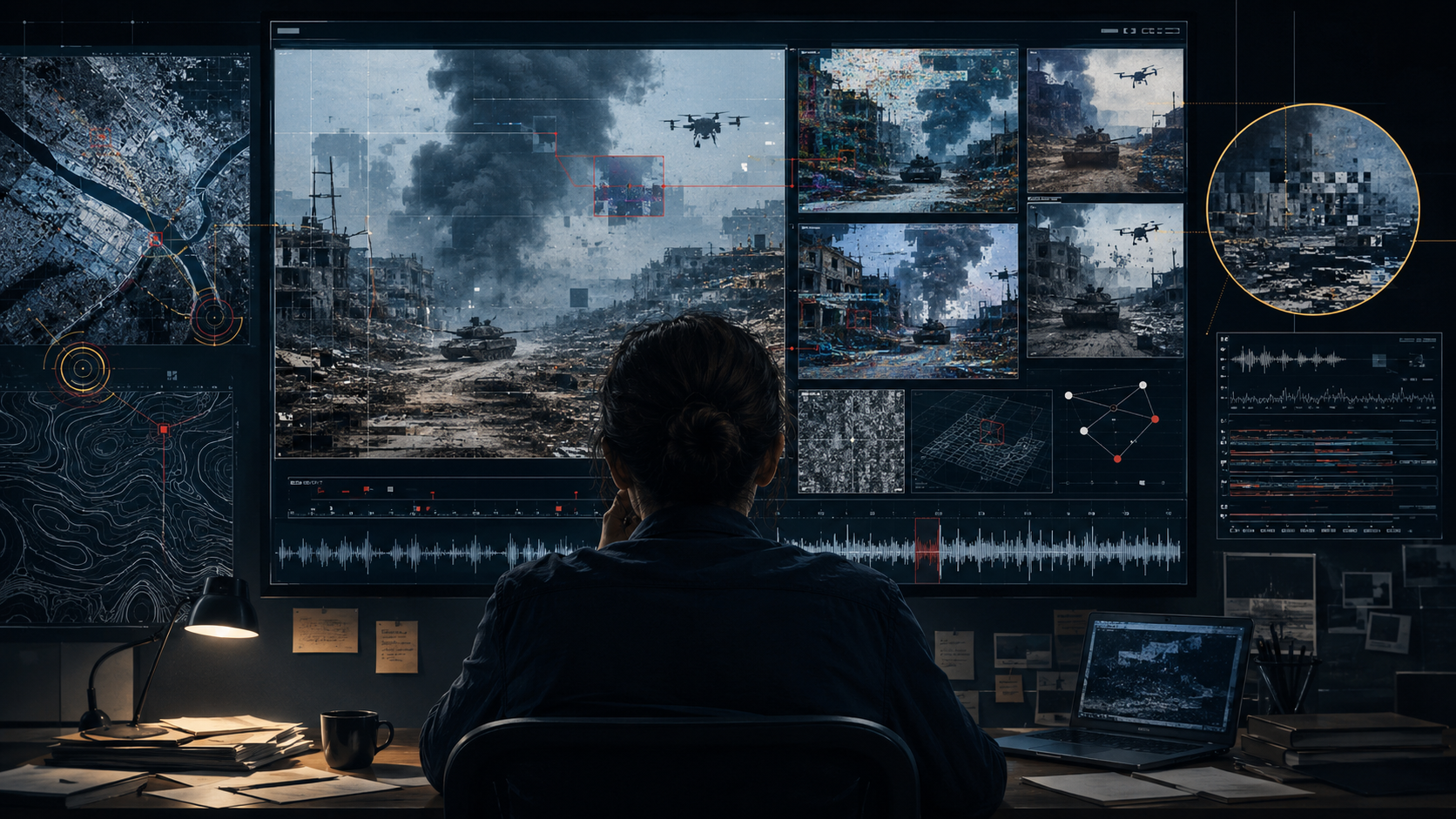
For a century, the camera did something propaganda could not easily fake: it put a fixed moment in front of a viewer and let them judge it. That assumption is now breaking down on the battlefield in Ukraine, and journalism has not caught up.
The Institute for the Study of War reported this week that Russian sources circulated what its analysts assess as likely AI altered or generated footage to support claims of advances near Borova and Mykolaipillya, according to ISW’s August 20 assessment. In one striking detail, Russian military bloggers themselves reportedly disputed a territorial claim because no genuine footage backed it up, a sign that even sympathetic observers are losing confidence in what they are shown. It is worth being precise about sourcing here: ISW’s reporting draws in part on a source reportedly tied to Ukrainian military intelligence, so the specific manipulation allegations need independent technical confirmation before they are treated as settled. It is also worth resisting the urge to make this a story about one side. Synthetic and misleading imagery is a temptation for any party in any conflict, and a fair account should watch for it everywhere.
What should change is not whether newsrooms trust footage, but how they earn that trust. Single image verification, does this look real, is no longer adequate when generative tools can produce convincing flags, uniforms, and terrain. What holds up is layered verification: cross referencing shadows and sun angle against the claimed time and location, matching visible terrain and structures against satellite imagery, checking weather conditions against archived forecasts for that date, requiring multiple independent sources before repeating a territorial claim, and, where possible, examining original file metadata rather than a re shared copy.
None of this is exotic. Open source investigators have used these methods for years. What is new is the frequency with which they are now necessary for routine battlefield claims, not just disputed high profile incidents. A newsroom that still treats video as self evidently true is, at this point, choosing not to look closely.
Comments
Join the conversation
Enter your email — we'll send a 6-digit code so you can post a comment. No password needed.
- Be the first to comment.