Turkiye, Saudi Arabia and Pakistan Sign Mecca Defence Pact as Middle East Tensions Escalate
The Mecca Joint Defence Agreement binds three of the Muslim world’s most influential states together as the Iran conflict rattles the Gulf.
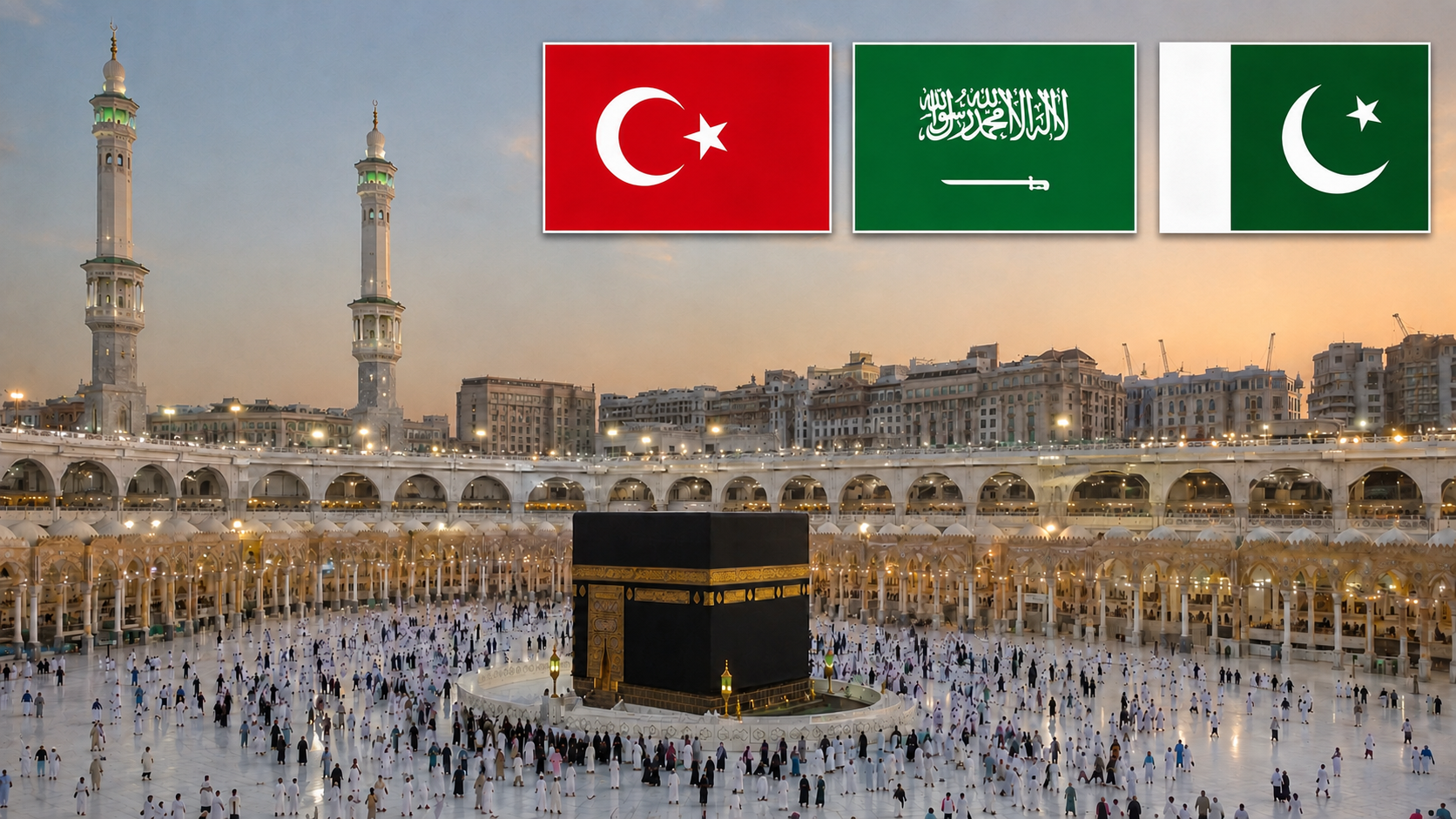
Turkiye, Saudi Arabia and Pakistan signed a landmark joint defence agreement in Mecca on Friday, formally binding three of the Muslim world’s most influential states together at a moment of intense regional turmoil driven by the ongoing conflict between the United States, Israel and Iran.
The pact, called the Mecca Joint Defence Agreement, was signed by Turkish President Recep Tayyip Erdogan, Saudi Crown Prince and Prime Minister Mohammed bin Salman and Pakistani Prime Minister Shehbaz Sharif, with their foreign and defence ministers present. According to a joint statement released by the three governments, the agreement establishes that an armed attack against any one of the three states will be treated as an attack against all of them, and commits the parties to deepen cooperation across the full range of defence activities.
The signing follows nearly a year of negotiations and comes as Saudi Arabia in particular faces mounting pressure. Since the United States and Israel struck Iran on February 28, Tehran and allied groups, including Yemen’s Houthi movement and Iraqi militias, have repeatedly targeted Gulf energy infrastructure and shipping, disrupting oil exports and raising doubts in Riyadh about the durability of its longstanding security relationship with Washington.
Turkiye and Pakistan have largely avoided direct attacks so far, but analysts say both countries have strong incentives to help stabilize a region critical to their own security and economies. The agreement is widely seen as combining complementary strengths: Turkiye’s rapidly expanding defence industry and NATO’s second largest standing army, Saudi Arabia’s financial resources and religious standing as home to Islam’s two holiest cities, and Pakistan’s status as the Muslim world’s only declared nuclear power.
Turkish officials described the pact as defensive and not directed at any specific country, adding that it remains open to other regional states that wish to join. The agreement’s long term implications, including whether other countries will be invited to join, are likely to become clearer in the months ahead.
Comments
Join the conversation
Enter your email — we'll send a 6-digit code so you can post a comment. No password needed.
- Be the first to comment.