LNG Canada Expansion Opens a New Chapter in Canada’s Energy Export Strategy
A 33 billion-dollar expansion in Kitimat will double LNG Canada’s capacity, and Prime Minister Mark Carney says it shows what “an energy superpower looks like when it decides to act like one.”
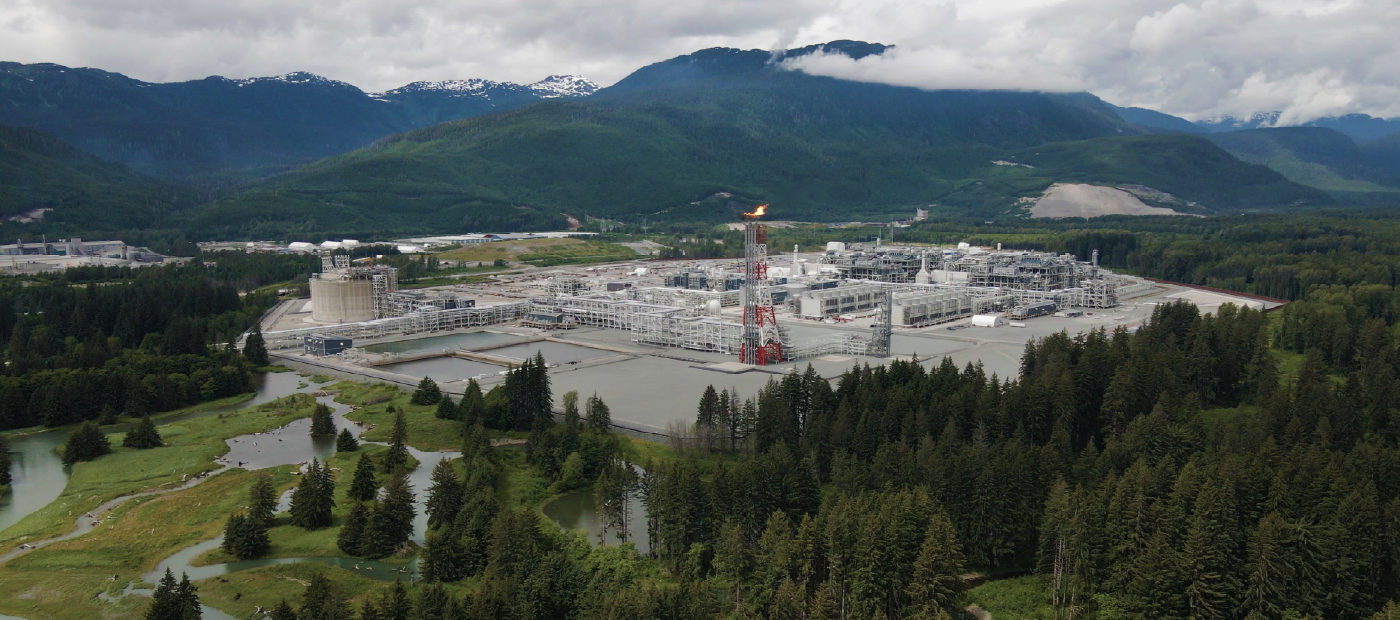
Canada’s effort to diversify its trade relationships gained one of its largest industrial commitments this week as the partners behind LNG Canada approved a second phase of the liquefied natural gas project in Kitimat, British Columbia.
An investment Ottawa calls historic
The expansion represents about $ 33 billion in private-sector investment, according to the Prime Minister’s Office, and is designed to double annual production capacity from 14 million tonnes to 28 million tonnes. Prime Minister Mark Carney called it proof that “Canada is building big and bold again,” adding that “that is what an energy superpower looks like when it decides to act like one.” He also credited the pace of the process itself, saying “twelve months from referral to final investment decision is the pace that this pivotal moment in Canada’s history demands.”
Why the government moved quickly
Natural Resources Minister Tim Hodgson said Ottawa had tried to remove bureaucratic friction for the project’s backers. “We gave them one point of contact,” he said, “and we provided the solutions they needed to make that investment.” Shell, which holds a 40 percent interest in the project, said commercial operations for the additional capacity are expected to begin in the early 2030s. Shell’s chief executive said the expansion “will create further opportunities to meet rising demand for global LNG, which is expected to grow by around 65 percent by 2050.”
A pacific route in a moment of trade uncertainty
The decision matters well beyond the Kitimat facility. Canada has long been one of the world’s largest natural gas producers, but its export system has historically been oriented toward the United States. LNG Canada gives producers direct access to overseas markets from the Pacific coast at a time when Ottawa is placing greater emphasis on reducing dependence on a single trading partner. The project partners are Shell, PETRONAS, PetroChina, Mitsubishi Corporation, and Korea Gas Corporation. Phase 2 will add two processing units, another storage tank, condensate facilities, a loading berth, and expanded utility systems. At the same time, Coastal GasLink is expected to expand its existing pipeline through additional compressor stations.
Jobs and Indigenous ownership
According to the Prime Minister’s Office, Phase 2 construction is expected to support more than 4,000 direct jobs, with a further 2,000 or more tied to the related Coastal GasLink pipeline expansion. Canada’s Major Projects Office separately estimates up to 240 ongoing operating jobs once the expanded facility is running. Five First Nations, Gitga’at, Gitxaała, Haisla, Kitselas, and Kitsumkalum, have an option to invest up to 1 billion dollars through an entity called MNT Investments LP, which would hold majority ownership of the new 225,000 cubic metre LNG storage tank. Separately, nearly 5 billion dollars in contracts connected to the project have already been awarded to First Nations and local businesses.
An unresolved climate question
The expansion nevertheless arrives with an unresolved climate question. Ottawa describes the facility as comparatively low in emissions intensity, but liquefied natural gas still carries greenhouse gas emissions through production, processing, transportation, liquefaction, and eventual combustion. The International Energy Agency has emphasized that emissions across the LNG supply chain vary substantially and that methane control is an important part of determining the climate impact of natural gas. Canada is also not currently projected to reach its 2030 national emissions target under measures already in place: the federal government’s 2025 progress report projected a 21 percent reduction below 2005 levels by 2030 under existing measures, compared with the official target of 40 to 45 percent. That gap does not, by itself, establish the effect of LNG Canada Phase 2, but it places the expansion within a broader national debate about how industrial growth and emissions reductions will be pursued at the same time.
What settles and what does not
The final investment decision settles whether the project partners intend to proceed. It does not settle the larger economic and environmental questions surrounding the expansion. Those will become clearer as construction advances, the Indigenous investment decision is finalized, pipeline capacity expands, and governments report the actual emissions and economic results.
Comments
Join the conversation
Enter your email — we'll send a 6-digit code so you can post a comment. No password needed.
- Be the first to comment.