Pro-Ukraine Government Wins Latvia Election as Security Shapes Baltic Politics
Prime Minister Andris Kulbergs says Latvians “want direct communication” and want the economy treated as “the top priority,” after United List won the largest mandate for a single party since independence.
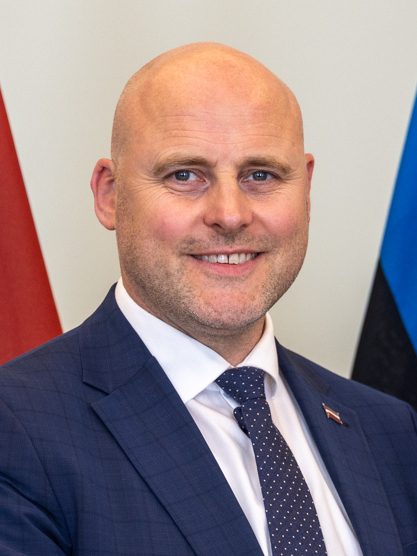
Latvia’s pro-Ukraine governing political bloc won a decisive parliamentary election victory this weekend, giving Prime Minister Andris Kulbergs a strong position to form another government in a NATO country bordering Russia and Belarus.
A record mandate, short of a majority
With nearly all ballots counted, Kulbergs’s centrist United List won 35.4 percent of the vote, enough for 42 seats in Latvia’s 100-seat parliament, the largest share won by a single party since Latvia regained independence in 1991. Kulbergs called it “a great, great amount of trust from voters,” adding that “people want change, people want direct communication, people want to see that we’re putting the economy as the top priority.” The result gives United List the largest parliamentary bloc, but not an outright majority, so coalition negotiations will determine the final government and the distribution of cabinet responsibilities. Analysts expect that process to move faster than usual given United List’s dominant position, with Kulbergs likely to let coalition partners keep key portfolios such as defence and the interior ministry.
Security dominated the campaign
Security was a central issue during the campaign. Latvia has been among the NATO members most concerned about Russian military activity, cyber operations, sabotage allegations, and drone incidents affecting the alliance’s eastern flank, and the country requested German fighter jets to help protect its airspace during the election period itself. Kulbergs has pledged to maintain defence spending at about 5 percent of gross domestic product, strengthen anti-drone capabilities, and continue Latvia’s support for Ukraine, including hosting a significant share of Ukraine’s government data on Latvian servers. The election occurred as tensions between Russia and NATO have increased around the Baltic region more broadly: Moscow recently warned that it could use nuclear weapons if NATO attempted to isolate Kaliningrad, the Russian territory between Poland and Lithuania, a warning NATO Secretary General Mark Rutte dismissed as not reflecting any genuine imminent threat.
Populist gains among Russian speaking voters
Latvia’s election should not be read only through the lens of foreign policy. Voters also weighed the cost of living, public services, and dissatisfaction with established institutions, and parties appealing to parts of Latvia’s Russian-speaking population, roughly a third of the country, gained ground. Latvia First finished second with about 13.1 percent, and Sovereign Power, a party that has called for negotiations over Ukraine and criticized policies affecting Russian speakers, entered parliament with about 11 percent. Those results illustrate real political divisions inside Latvia without changing the central outcome: the largest bloc remains firmly supportive of NATO and Ukraine. At the same time, two of Kulbergs’s prior coalition partners lost ground, and the Union of Greens and Farmers lost its seats entirely.
Why the result matters beyond Latvia
Latvia’s geography gives the election wider significance. The country sits between Estonia and Lithuania and shares eastern borders with Russia and Belarus, and allied forces are deployed there as part of NATO’s deterrence posture. The vote offers a concrete indication of how security concerns are shaping democratic politics in the countries closest to Russia, even as a strong election result is not the same as a completed governing program. Kulbergs must still assemble a parliamentary majority, and coalition partners may seek changes to domestic or economic policy before forming a new government. The next important development will be the coalition agreement itself, which will show how Latvia intends to balance high defence spending, continued support for Ukraine, and domestic pressure over public services and household costs. For NATO and Ukraine, the result points toward continuity. For Latvia, the harder work of turning a strong election victory into a stable government is only beginning.
Comments
Join the conversation
Enter your email — we'll send a 6-digit code so you can post a comment. No password needed.
- Be the first to comment.