
Turkiye’s KAAN Fighter Jet Reaches New Milestone as Second Prototype Completes First Taxi Test
The refined P1 prototype completed its first taxi test near Ankara, with a maiden flight expected within months and deliveries targeted for 2028.
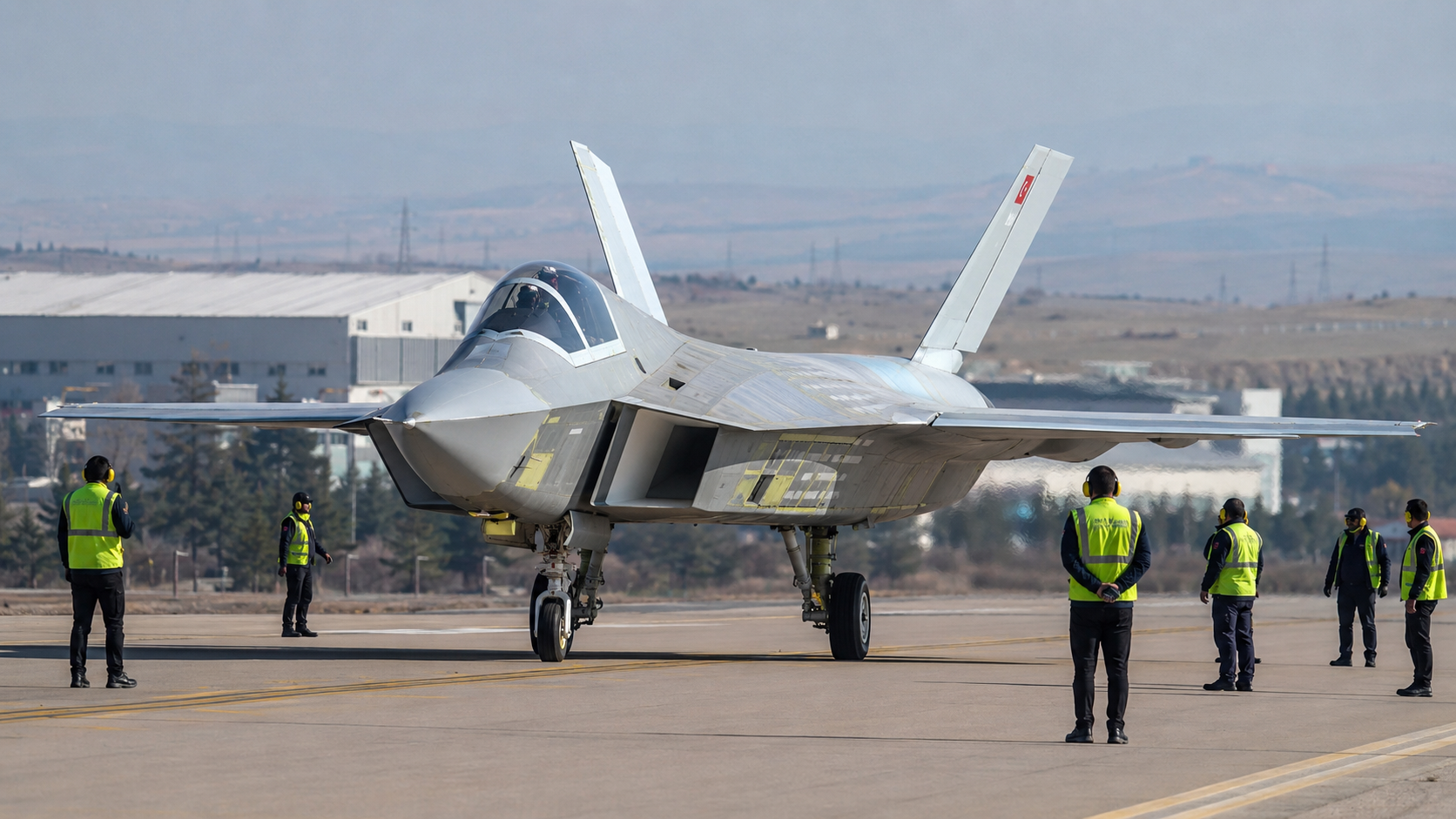
Turkiye’s flagship defence program passed a key checkpoint this week as Turkish Aerospace Industries, known as TUSAS, announced that the newest prototype of the KAAN fifth generation fighter jet successfully completed its first taxi test at the company’s facilities near Ankara.
Footage released by TUSAS showed the aircraft, designated P1, moving along the runway under its own power in a low speed trial accompanied by ground technical teams. Powered taxi testing, in which engineers verify brakes, steering, engine response and ground handling, is a standard but critical step before any new aircraft attempts flight.
The P1 is not the airframe that first took KAAN into the air. That earlier aircraft, the P0, served as a proof of concept demonstrator, flying for the first time on February 21, 2024, before being reassigned to ground and systems testing. The P1 incorporates visible refinements over its predecessor, marking the program’s transition from technology demonstration to a developmental flight test fleet.
Speaking at the Farnborough International Airshow last month, TUSAS chief executive Mehmet Demiroglu said the P1 could make its maiden flight within a couple of months, with the follow on P2 prototype expected to fly before the end of 2026. Turkiye’s defence procurement authority contracted a first batch of 20 Block 10 aircraft in May, with deliveries scheduled between 2028 and 2030.
The prototypes are powered by American made General Electric F110 engines, with an export authorization for a sale valued at roughly 700 million US dollars cleared by the US Congress on July 9. Turkiye launched the homegrown program after being removed from the American F35 project in 2019, a decision that pushed the country to develop its own next generation combat jet.
Program timelines cited are company targets and remain subject to testing outcomes.
Comments
Join the conversation
Enter your email — we'll send a 6-digit code so you can post a comment. No password needed.
- Be the first to comment.