Fighting Returns to Tigray as Ethiopia Faces Risk of a Wider War
Nearly four years after a peace agreement ended one of the world’s deadliest recent conflicts, former battlefield enemies have allied against Addis Ababa, and the political settlement that ended the last war is under severe strain.
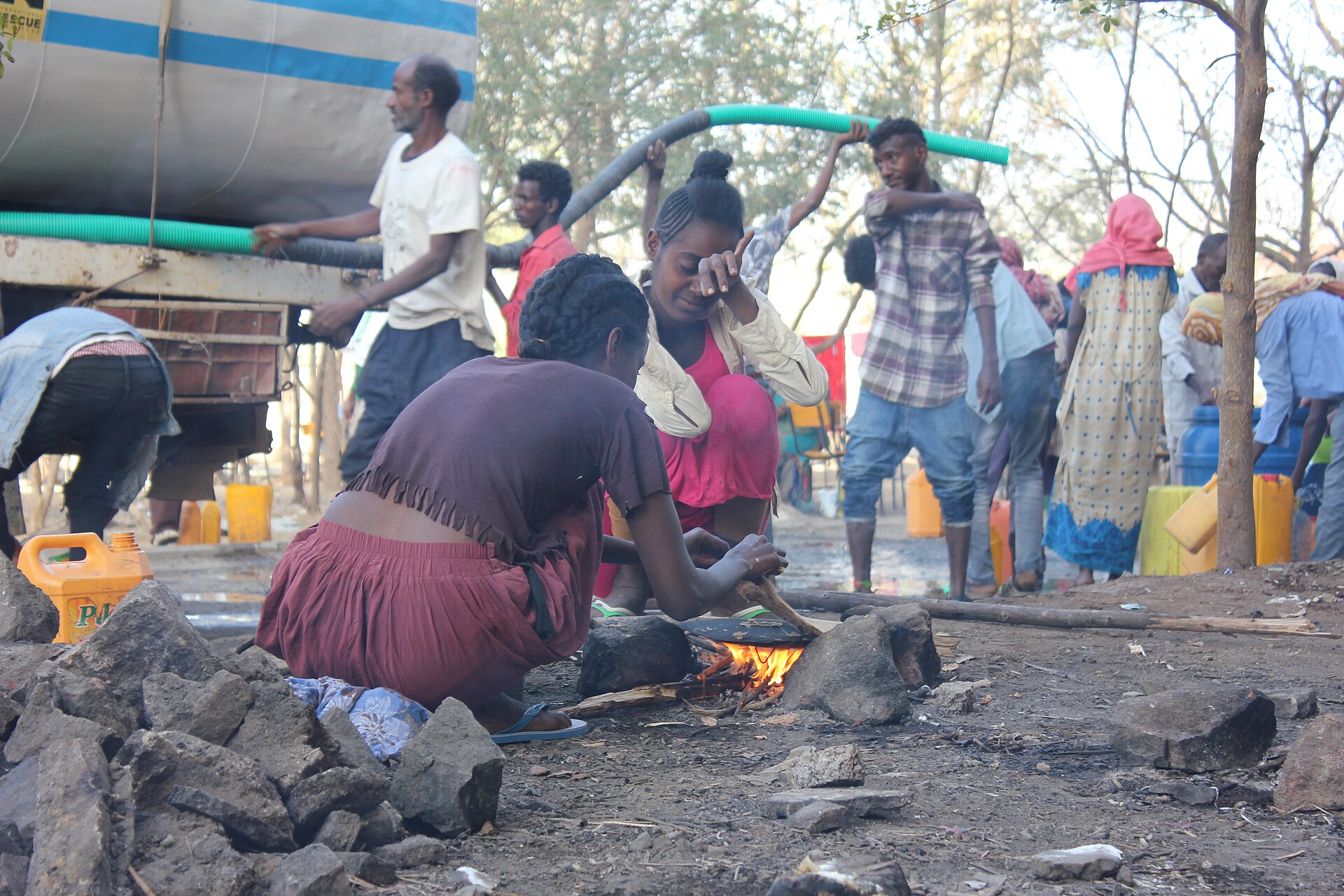
Seven armed groups announced on September 20 that they had formed a coalition called the Ethiopian Peoples’ Forces Alliance for Survival (EPFAS), aimed at Ethiopian Prime Minister Abiy Ahmed’s government. The alliance includes the Tigray People’s Liberation Front (TPLF), the Amhara Fano National Movement, and the Oromo Liberation Army (OLA), groups that in some cases fought on opposite sides of Ethiopia’s devastating 2020 to 2022 civil war and have since fought each other.
Within days, the coalition’s significance became concrete, not symbolic. Tigrayan forces seized three airports on September 24, and fighting also broke out separately in Ethiopia’s Amhara and Afar regions. Communications in parts of Tigray have been disrupted. The African Union, which helped broker the war’s end, said the airport seizures were “inconsistent with the Pretoria deal” and called for de-escalation, while asking former Nigerian president Olusegun Obasanjo, the original 2022 mediator, to help manage the situation.
What the Pretoria agreement was supposed to settle
The November 2022 Pretoria Agreement ended a war that killed an estimated 600,000 people, one of the deadliest conflicts of the past decade, largely fought between the federal government and allied forces on one side and the TPLF on the other. The deal disarmed TPLF forces and restored federal authority over Tigray. Still, it left unresolved the disputed territory of Western Tigray and the broader question of how power would be shared among Ethiopia’s ethnically defined regions going forward.
That unfinished business has resurfaced amid Ethiopia’s contested politics. Abiy’s Prosperity Party won roughly 90 percent of lower house seats in elections in June 2026, an election in which no voting took place in Tigray, feeding grievances in the regions now aligned against him.
Why former enemies are cooperating now
The cooperation between Tigrayan, Amhara and Oromo factions marks a striking reversal. Amhara militias fought alongside the federal government against Tigrayan forces during the 2020 to 2022 war, and Amhara Fano forces have since turned against Abiy’s government, accusing it of trying to disarm regional militias and centralize power. The Oromo Liberation Army has fought an on-and-off insurgency against the federal government for years. What binds the alliance together now is less a shared political program than a shared adversary in Addis Ababa, which is also why observers describe the coalition as fragile.
A similar coalition, the United Front of Ethiopian Federalist and Confederalist Forces, formed in November 2021 and collapsed within about a year, after the Afar Revolutionary Democratic Unity Front withdrew and a Benishangul-aligned group struck a separate peace deal with the government. Getachew Reda, a former senior TPLF official who now advises Abiy, pointed to that history and dismissed the new alliance’s prospects. “I don’t lose sleep over that,” he said, and blamed for the latest fighting on the TPLF directly. Tigrayan officials describe their own actions as defensive.
Eritrea’s disputed role
Ethiopian government spokesperson Billene Seyoum told Reuters that the alliance’s member groups had been “collaborating for a while with the financial backing of” Eritrea, Ethiopia’s northern neighbour and a bitter rival of the TPLF, now a wary neighbour of Abiy’s government since the Pretoria agreement. Eritrea has repeatedly denied backing the alliance. Horn of Africa researcher Martin Plaut has reported that Eritrean and Sudanese officials took part in coordination meetings connected to the alliance’s formation. However, the extent of any material support remains unconfirmed.
Eritrea’s potential involvement matters beyond the immediate accusation. Eritrea and the TPLF fought each other for decades before finding themselves informally aligned against the TPLF during the 2020 to 2022 war, then drifting toward confrontation with Addis Ababa afterward over Eritrea’s own grievances about the peace process. A conflict that draws in Eritrea, even indirectly, would extend the crisis well past an internal Ethiopian dispute and into a regional one.
Why this could spread beyond northern Ethiopia
The combination of factors now in play- an alliance spanning three of Ethiopia’s largest and most heavily armed regional political constituencies, simultaneous unrest in Amhara and Afar, a disputed election that left the government’s legitimacy in question in the affected regions, and an unresolved dispute with Eritrea- is what distinguishes the current crisis from a narrower Tigray-only conflict. The African Union’s decision to invoke the Pretoria agreement directly and ask Obasanjo to intervene again reflects concern that, without renewed mediation, the situation could widen rather than resolve on its own.
Comments
Join the conversation
Enter your email — we'll send a 6-digit code so you can post a comment. No password needed.
- Be the first to comment.