
Canada Prepares Dollar for Dollar Tariffs as Trade Talks With United States Collapse
Ottawa will impose new retaliatory tariffs beginning September 8 after negotiations failed and Washington introduced 50 percent duties on roughly 28 billion dollars of Canadian goods.
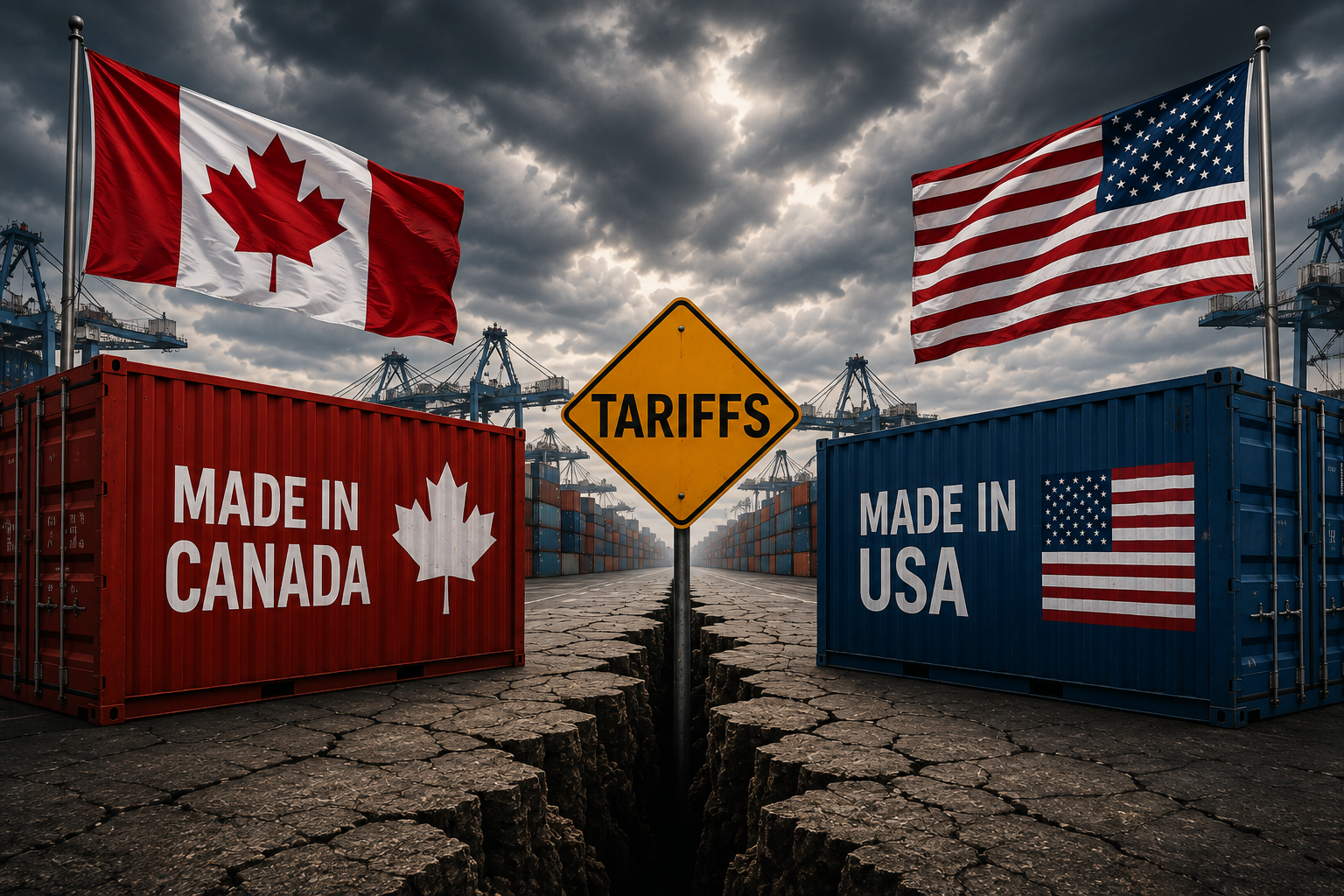
Canada is preparing a new round of retaliatory tariffs against the United States after negotiations that appeared close to producing an agreement collapsed at the deadline, pushing the two countries into a more serious phase of their trade confrontation.
Prime Minister Mark Carney said, in remarks released by the Prime Minister’s Office, that Canada will match the latest American tariffs dollar for dollar. The Canadian measures are scheduled to take effect on the Tuesday after Labour Day, September 8, and will concentrate on sectors including steel, dairy products, appliances, agricultural equipment, pulp and paper, and electronics. The federal government says detailed product lists will be released in the coming days.
The decision follows the introduction of 50 percent United States tariffs on roughly 28 billion dollars of Canadian goods, according to the Prime Minister’s Office. The measures extend beyond sectors that had already faced American trade restrictions and affect products that include clothing, cement, beer and sporting equipment.
The breakdown is significant because negotiators had made enough progress earlier in the week for Washington to postpone the new tariffs until the end of August 21. Canada had been seeking substantial reductions in American tariffs affecting strategic industries while preserving preferential access for most Canadian exports.
The two governments disagree sharply about why negotiations failed. Carney said, according to the Prime Minister’s Office, that the United States introduced new terms late in the process that Canada considered unfair and economically unacceptable. He said Ottawa was prepared to make concessions involving existing Canadian retaliatory tariffs and to encourage provinces to return American alcohol to store shelves if Washington offered meaningful tariff reductions, but that Canada was not prepared to accept conditions affecting Canadian sovereignty, cultural policy or protection of the French language. American officials have presented a different account, with Associated Press and Reuters reporting that Washington argues Canada moved away from commitments made during negotiations.
That disagreement is important because it suggests the dispute is no longer simply about tariff percentages. It increasingly concerns what each government believes the future economic relationship should look like.
The Canadian response also represents a calculated economic risk. Carney acknowledged that retaliatory tariffs will increase some prices and reduce consumer choice in Canada. The government nevertheless argues that failing to respond would leave Canadian producers competing against American companies without equivalent protection.
The immediate question is how broad the September measures will be. Ottawa must decide which American products to target while limiting damage to Canadian companies that depend on United States components and equipment.
The larger question concerns CUSMA and the future of continental economic integration. Canada and the United States built supply chains over decades on the assumption that market access would remain relatively predictable. The current confrontation weakens that assumption. Canada is therefore pursuing two strategies simultaneously: retaliating against American tariffs while attempting to reduce its economic dependence on the United States through new trade relationships and greater internal Canadian commerce.
That transition cannot happen quickly. The United States remains Canada’s overwhelmingly important trading partner, and many industries cannot simply redirect integrated supply chains to another market.
What happens after September 8 will therefore matter more than the immediate political confrontation. If both governments leave space for negotiations to resume, the tariffs could remain bargaining instruments. If the measures become permanent, Canada may be entering a much longer period of economic restructuring.
Comments
Join the conversation
Enter your email — we'll send a 6-digit code so you can post a comment. No password needed.
- Be the first to comment.