Canada Braces for Midnight Tariff Deadline After Second Carney Trump Call This Week
Prime Minister Mark Carney and President Donald Trump spoke twice this week as Canada approached a deadline for new fifty percent tariffs, with no deal publicly confirmed and industry groups warning of job losses.
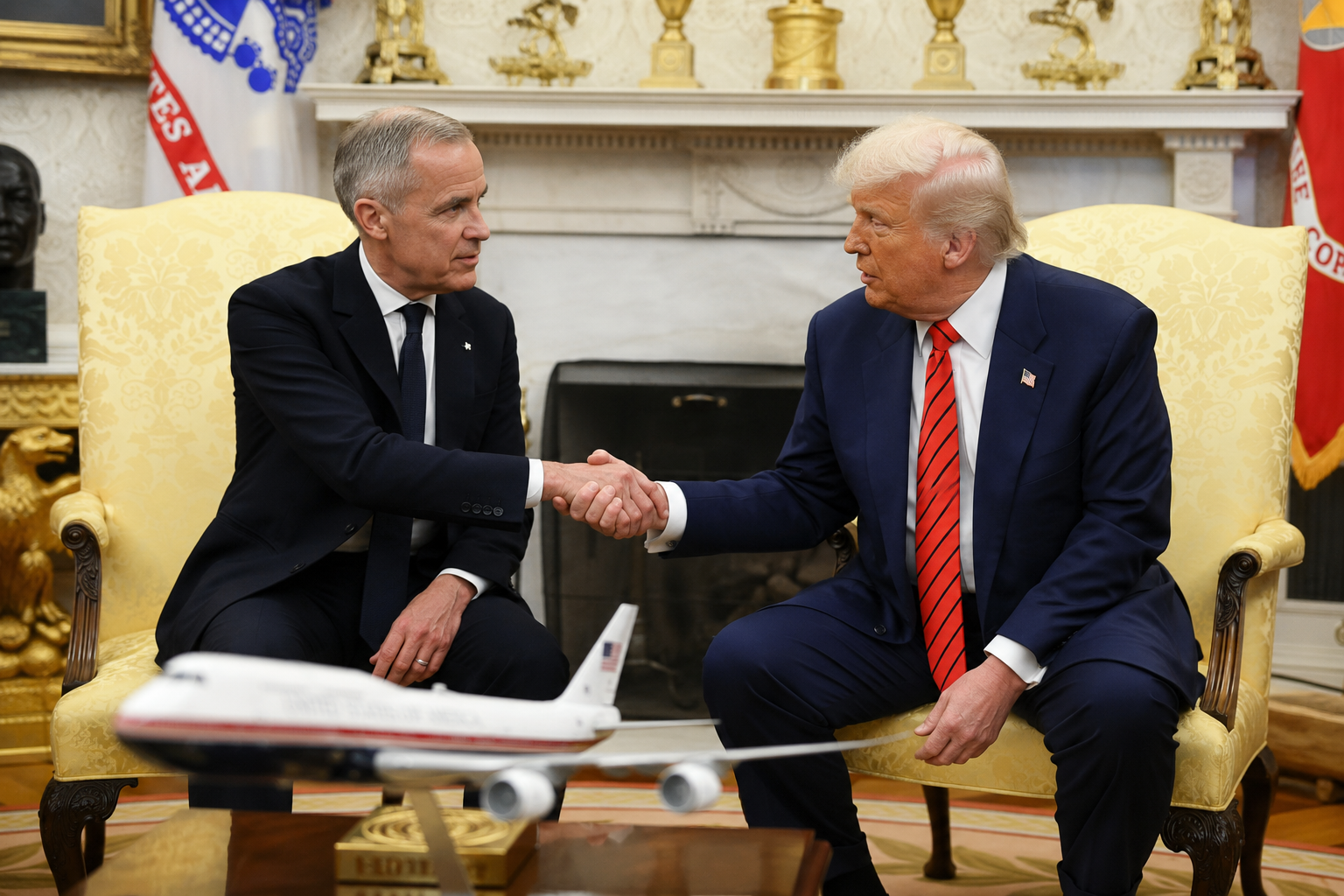
Canada entered the final hours before a new US tariff deadline this week with no public confirmation of a deal, despite two conversations between Prime Minister Mark Carney and President Donald Trump in as many days.
The two leaders spoke by phone Monday and again Tuesday afternoon, according to Carney’s office, which described both calls only as being about “ongoing negotiations” without further detail. The tariffs, imposed under Section 338 of the Tariff Act of 1930, are set to take effect at 12:01 a.m. Wednesday regardless of whether talks continue, applying a fifty percent rate to close to twenty billion dollars a year in Canadian goods across the dairy, alcohol and motor vehicle sectors.
Trade experts and industry officials have warned the measure could cause job losses and business closures in vulnerable sectors including lumber, wine and dairy. Unlike many products traded under the existing continental agreement, goods covered by the new measure will not receive the exemption that has shielded much of Canadian industry from earlier tariffs. John Brink, president of the Brink Group of Companies, said the combined effect of existing tariffs and duties has already pushed some lumber exporters to pay up to 45 percent, calling the impact on British Columbia’s manufacturing capacity devastating.
Canadian Trade Minister Dominic LeBlanc and chief trade negotiator Janice Charette have been in Washington since last week, meeting Monday with US Trade Representative Jamieson Greer and Commerce Secretary Howard Lutnick for nearly two hours. LeBlanc told reporters afterward that the job was “not yet done.” Talks have focused on longstanding disputes including automobile tariffs, dairy market access, provincial restrictions on American alcohol sales, and the treatment of North American content in the auto sector, with Canadian negotiators reportedly seeking a reduction in vehicle tariffs from twenty five percent to fifteen percent.
The dispute lands as Canada is already contending with renewed inflation pressure. Statistics Canada reported that the annual inflation rate rose to 3.0 percent in July from 2.8 percent in June, driven mainly by a 25.7 percent jump in gasoline prices tied to renewed Middle East hostilities and disruption to Gulf shipping routes. The reading sits at the top of the Bank of Canada’s one to three percent target range, though economists have generally described the underlying core measures as stable enough that the central bank is unlikely to change course at its next decision.
Carney has said Ottawa has a plan ready to “cover all eventualities” if the new tariffs take effect, language commentators have read as signalling possible countermeasures. Candace Laing, chief executive of the Canadian Chamber of Commerce, said businesses have been “doing a high wire act for well over a year, holding off on hiring, investment and growing in Canada” amid the uncertainty. Whether Wednesday’s deadline produces a deal, a partial arrangement, or tariffs without one will depend on whether this week’s calls between the two leaders produced movement neither side has yet disclosed.
Comments
Join the conversation
Enter your email — we'll send a 6-digit code so you can post a comment. No password needed.
- Be the first to comment.