
Canada Loses 68,300 Jobs in September as Youth Employment Weakens
The unemployment rate rose to 6.5 percent as a second monthly employment decline wiped out the year's gains and left the Bank of Canada facing a harder decision.
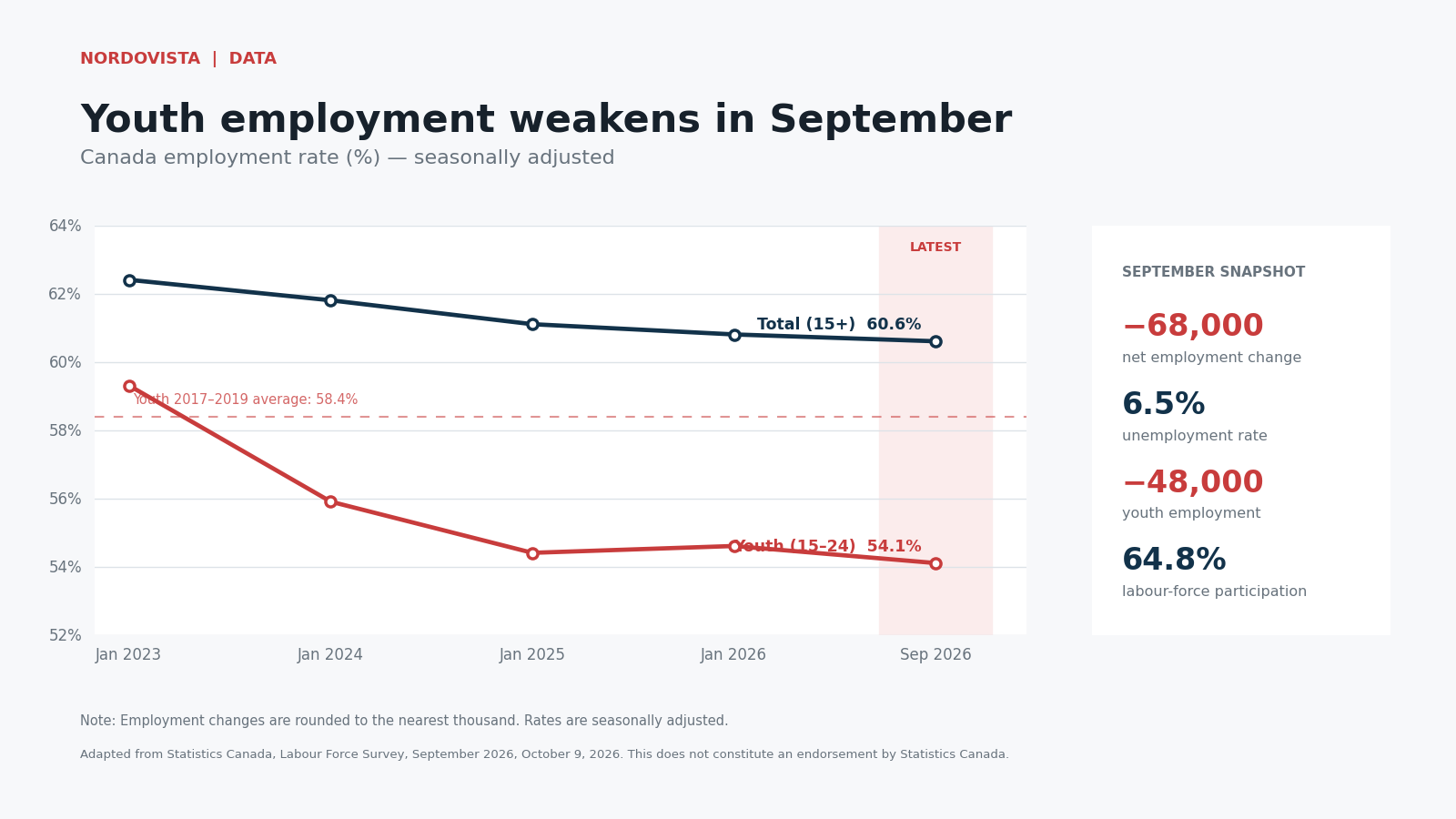
Canada lost 68,300 jobs in September, according to Statistics Canada data released Friday, following a decline of 41,700 positions in August. The unemployment rate rose to 6.5 percent from 6.4 percent, and the two monthly losses together have cancelled out the job gains recorded earlier in 2026.
A result far from forecast
Economists polled by Reuters had expected a gain of 9,200 jobs. Instead, Canada is now down a net 41,200 jobs for the year to date, compared with a gain of 211,300 in the same period last year. The losses were split almost evenly between full-time and part-time work. Wage growth for permanent employees edged up to 2.3 percent from 2 percent a year earlier, a small offset in an otherwise weak report.
Young workers and the public sector
Employment among people aged 15 to 24 fell by 48,000. Public sector jobs fell the most: educational services, along with health care and social assistance, lost 58,400 jobs, according to Reuters. Manufacturing, more exposed to American trade measures, lost 12,700 jobs.
Tariffs: a cautious reading
The figures do not show that U.S. tariffs caused the overall decline. September was the first full month after a new round of American tariffs, but Reuters reported that job losses in industries that sell mainly to the United States were not significantly higher, and that the largest losses were in sectors not directly defined by those measures. Economists quoted in the Reuters report said the tariffs were unlikely to affect employment data much in the coming months.
Participation falls to a 29-year low
The labour force participation rate fell by 0.2 percentage points to 64.8 percent, its lowest level in 29 years outside the pandemic period, according to Reuters. The decline reflects an aging population, slower immigration, and current labour market conditions, so the headline isn't only a cyclical story.
Markets and the Bank of Canada
The Canadian dollar fell 0.44 percent to about 1.4287 per American dollar, and Reuters reported an 18-month low against the U.S. currency. Traders cut their bets on a Bank of Canada rate increase at its October 28 meeting, with the next increase now priced for December. Royce Mendes, head of macro strategy at Desjardins, said that "given the recent deterioration in the labour market," the central bank will likely need to keep rates unchanged later this month, and that higher energy prices "will begin feeding other categories of inflation this fall."
What to watch
The next employment reports will show whether September marks a temporary adjustment or a more persistent deterioration. The Bank of Canada must weigh a weaker labour market against inflation pressure from higher energy prices, and this report is the last major jobs figure before its end-of-October decision.
Comments
Join the conversation
Enter your email — we'll send a 6-digit code so you can post a comment. No password needed.
- Be the first to comment.