Canada and Norway Move to Deepen Arctic Defence Cooperation
Ottawa and Oslo plan an enhanced defence agreement as Canada advances a Norwegian-German submarine design chosen over a Korean competitor, with both countries expanding cooperation in Arctic security, space, critical minerals, and emerging technology.
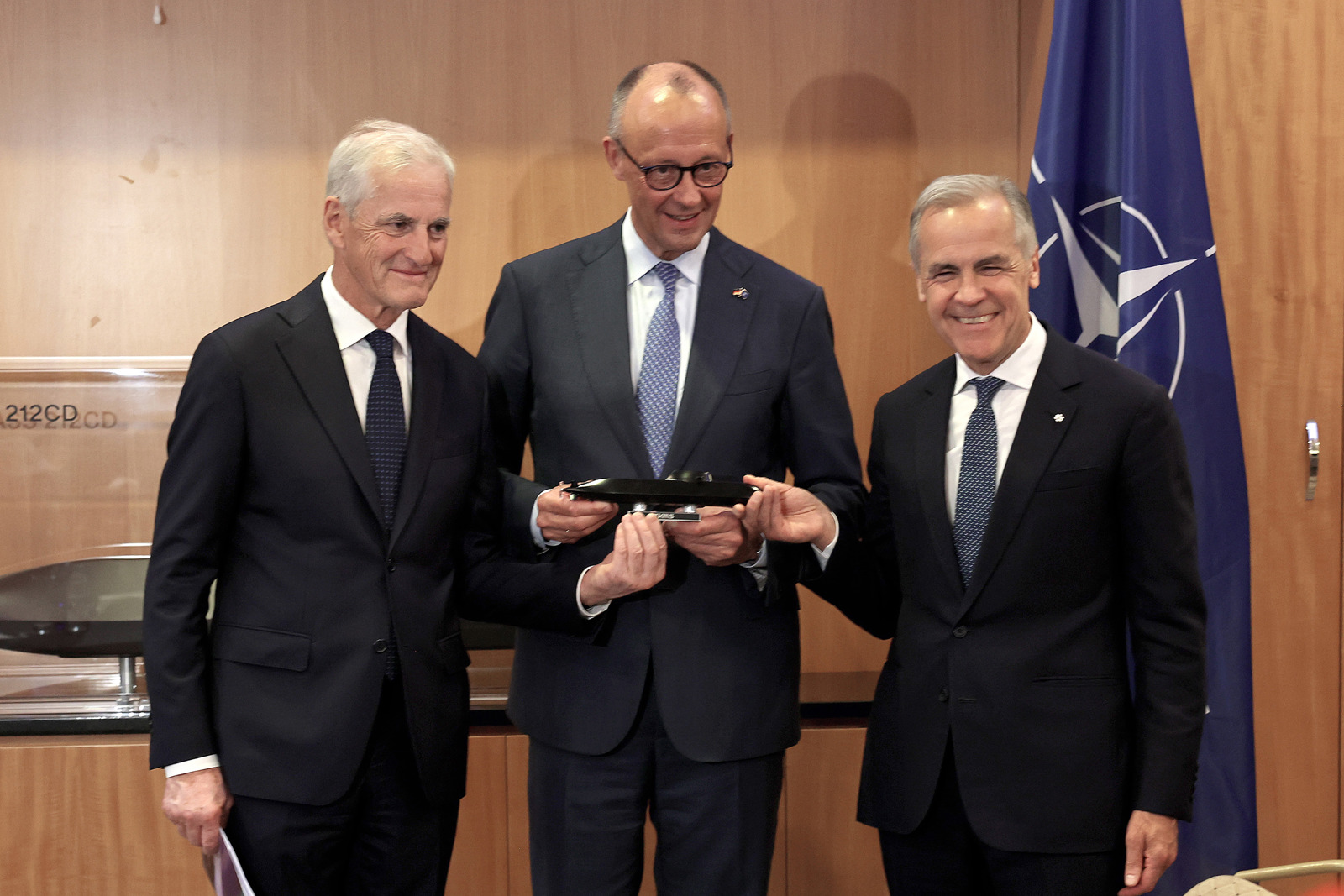
Canada and Norway are moving toward a broader defence and security partnership focused on the Arctic and North Atlantic, adding another European relationship to Ottawa’s effort to strengthen military resilience and reduce strategic vulnerabilities.
What was announced in Ottawa
Prime Minister Mark Carney and Norwegian Prime Minister Jonas Gahr Store met in Ottawa on Sunday. They announced their intention to advance an enhanced Defence Cooperation Agreement in the new year. The initiative builds on Canada’s selection of the TKMS 212CD submarine, jointly developed by Norway and Germany, as a preferred supplier for Canada’s next submarine fleet. Canada has not announced a final procurement decision, and the planned defence agreement is broader than the submarine project.
A competition the original announcement did not dwell on
That submarine choice followed a genuinely contested process. Carney selected a dozen submarines from the European partnership in July over a competing bid from a Korean shipbuilder, according to The Canadian Press, after what it described as a months long, hotly contested bidding process. The chosen partnership involves a German company working with Norway, with the three nations collaborating to produce and maintain the submarines, a three-way industrial arrangement that the new defence agreement is meant to formalize.
Why both leaders framed this around Russia
Carney said his focus on building international relationships, including with Norway, is part of the answer to renewed threats from Russia. At a joint news conference, both leaders were asked about warnings from Poland’s prime minister that Russia may be planning hybrid strikes involving drones or rockets against European countries supporting Ukraine. Store said those warnings should be taken seriously, adding that Norwegian intelligence has concluded real threats are coming from hybrid activity, ranging to potential sabotage. Carney did not comment on the specific credibility of the threats but said he agreed with Store’s assessment. Store also framed the broader Arctic relationship in a phrase he returned to twice. The phrase that always sticks with me, he said, is High North, low tension, adding that achieving it requires submarine and space capabilities as well as the right partners among Arctic nations working together.
The shared priorities beyond submarines
The two governments identified Arctic security and defence, space, critical minerals, emerging technologies, climate and oceans, and support for Ukraine as shared priorities in a joint statement. Building on a Joint Statement on Sovereign Technology and Artificial Intelligence Cooperation issued in March, Canada and Norway also agreed to deepen cooperation on digital sovereignty and AI, including its responsible development and use in the public sector. The leaders welcomed a new memorandum between Polar Knowledge Canada and the Norwegian Polar Institute intended to strengthen Arctic and Antarctic science and research.
Part of a wider pattern, not a standalone visit
Carney’s Norway meeting was not an isolated stop. He travelled to Saint Pierre and Miquelon earlier the same day to meet French President Emmanuel Macron before returning to Ottawa for Store’s visit, telling reporters the time spent, whether in the High North with Norway, with the French president who is directly implicated in a number of these decisions, or in Ottawa today, is all connected. The meeting fits a wider Canadian strategy: Ottawa has recently pursued closer defence and economic relationships with France, the European Union, the United Kingdom and Nordic partners while investing more heavily in Arctic capabilities.
Why Norway and Canada need each other here
Canada and Norway are both Arctic countries and NATO allies, and their northern geography gives them overlapping interests in surveillance, maritime awareness, infrastructure, and protecting routes and resources in regions where Russia maintains a substantial military presence. Norway brings direct experience operating in Arctic waters and has already worked with Germany on the 212CD programme. Canada, meanwhile, has a much larger Arctic territory, faces significant infrastructure and surveillance requirements, and needs to replace its aging Victoria-class submarine fleet.
What actually has to happen next
For Canada, the practical importance will depend on what follows the political announcements. An enhanced defence agreement could make joint training, procurement, technology cooperation and military planning easier, but its scope will only become clear when negotiations produce detailed terms. The submarine project will be one of the most closely watched elements, since undersea capability is increasingly important for Arctic surveillance and North Atlantic defence. The next milestones will be negotiating the enhanced defence agreement and making further decisions on submarine procurement, which will show how much of the Canada-Norway partnership moves from strategic alignment into operational cooperation.
Comments
Join the conversation
Enter your email — we'll send a 6-digit code so you can post a comment. No password needed.
- Be the first to comment.