Canada Inflation Holds at 3 Percent as Energy Costs Keep Pressure on Consumers
Annual inflation was unchanged in August as gasoline remained sharply more expensive than a year earlier, while grocery price growth slowed below the headline rate and core measures stayed close to target.
Canada’s annual inflation rate held at 3.0 percent in August, leaving household budgets under continued pressure even as the pace of grocery price increases eased and underlying core inflation stayed close to the Bank of Canada’s target.
What Statistics Canada reported
Statistics Canada reported Monday that the Consumer Price Index rose 3.0 percent from a year earlier, matching July. On a monthly basis, the index fell 0.1 percent, while after seasonal adjustment it increased 0.2 percent. The reading remains below the 3.2 percent peak recorded earlier this year following the outbreak of the Iran conflict. However, it sits at the upper edge of the Bank of Canada’s 1 to 3 percent inflation control range.
Why gasoline still dominates the headline number
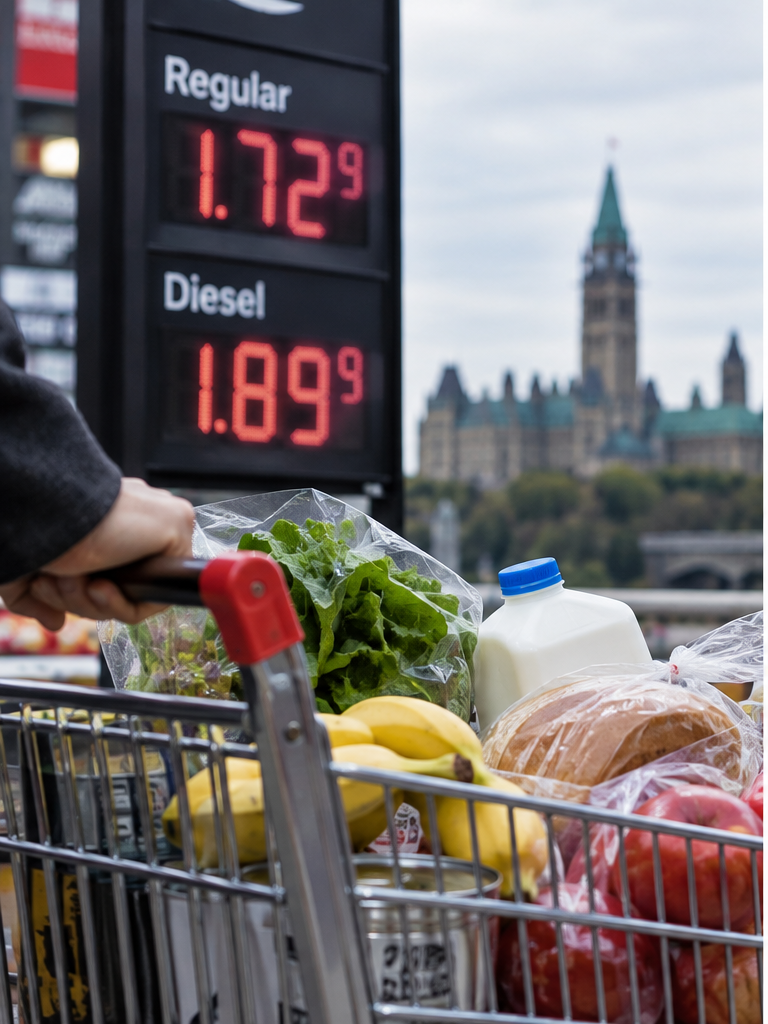
Energy remained the most important source of pressure. Gasoline prices were 22.8 percent higher than in August 2025, a slower pace than the 25.7 percent annual rise recorded in July. However, fuel costs remained elevated amid the continuing conflict in the Middle East. Removing gasoline from the calculation gives a different picture of underlying household price pressure. Statistics Canada said the index excluding gasoline rose 2.4 percent from a year earlier, up from 2.2 percent in July.
What core inflation shows beneath the headline
This is where the picture becomes more reassuring, at least for now. The Bank of Canada’s preferred core inflation measures, the trimmed mean and median rates, averaged close to target in August, with the trimmed mean at 1.9 percent and the median at 2.0 percent, both essentially unchanged from July. CIBC senior economist Andrew Grantham said core measures continued to show limited evidence that high energy prices are spilling over into wider inflationary pressure. RBC economist Abbey Xu offered a similar but more cautious read, writing that price growth remained high for energy-intensive categories such as air travel but had not spread materially across the broader consumer basket, while warning that the risk of greater pass-through will rise the longer oil prices remain elevated.
Groceries offer real, if partial, relief
Grocery inflation continued to moderate. Food purchased from stores cost 2.8 percent more than a year earlier, down from a 3.1 percent increase in July, marking the first time since July 2024 that grocery price growth was slower than overall inflation. Dairy products led the deceleration, rising just 0.7 percent year over year compared with a 3.1 percent increase in July, with cheese and yogurt the top contributors to that slowdown. Smaller price increases for fresh or frozen pork, condiments and fresh fruit also contributed. Clothing prices fell 1.1 percent from a year earlier, adding further downward pressure outside the grocery aisle.
That relief has limits
That moderation does not mean grocery bills have returned to earlier levels. Statistics Canada said grocery prices were 29.0 percent higher than in August 2021, illustrating the difference between slower inflation and falling prices. A BMO economist identified only as Reitzes in reporting reviewed for this piece called a 0.2 percent monthly dip in food prices, driven by cheaper fresh fruit and vegetables, a surprise, while separately warning that gasoline is on pace to rise at least five percent in September, which, if realized, would likely mean an acceleration in headline inflation next month.
Rent and travel moved the other way
Rent accelerated during the same period. National rent prices increased 2.8 percent from a year earlier, compared with 2.5 percent in July. Travel tours were another source of upward pressure, rising 26.1 percent from a year earlier, up sharply from 15.2 percent in July. Statistics Canada attributed part of that increase to a base-year effect tied to a sharp decline in Canadian travel to the United States in 2025, a comparison that has now washed out of the annual figures, with rising jet fuel-related surcharges also contributing, according to reporting from The Canadian Press.
What to watch next
For households, the August report offers a genuinely mixed picture. Food inflation is easing, gasoline inflation slowed, and core measures remain close to target. Still, the overall rate remains at the upper edge of the Bank of Canada’s control range, and at least one economist is already warning that September’s gasoline prices could push the headline rate higher again. The next question is whether elevated global energy prices persist long enough to spread more broadly through transportation, travel and other consumer costs, or whether core inflation’s current stability holds even if gasoline prices rise further. Statistics Canada is scheduled to publish the September Consumer Price Index on October 19.
Comments
Join the conversation
Enter your email — we'll send a 6-digit code so you can post a comment. No password needed.
- Be the first to comment.