
Canada Reportedly Explores EU Associate Status, but Ottawa Pushes Back on Membership Framing
The Wall Street Journal reports Prime Minister Carney has raised the idea of associate status with European officials. Still, a senior government source tells CTV News Canada is not seeking EU membership in any capacity, ahead of Carney's address to the European Parliament this week.
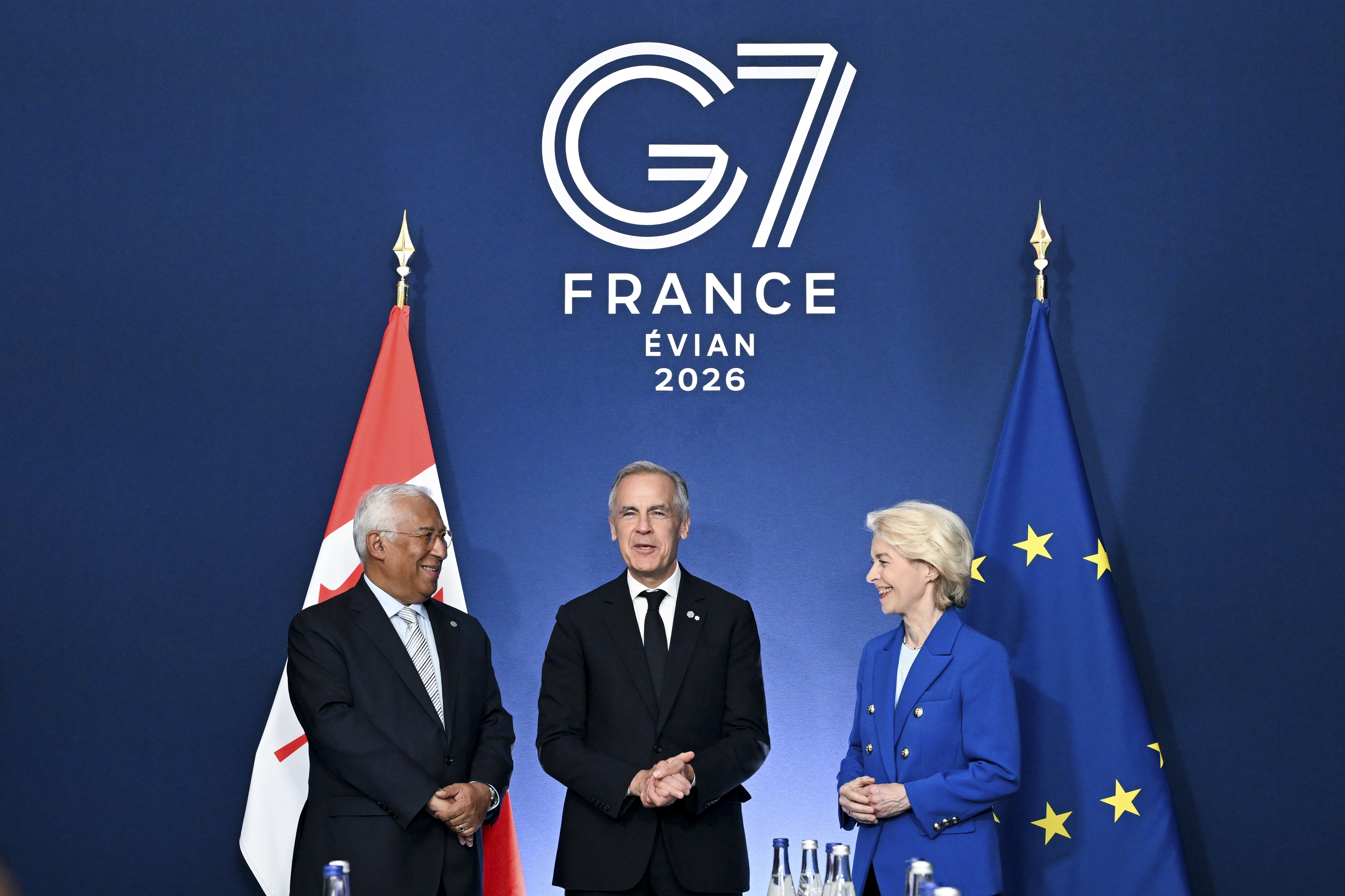
Canada is reportedly exploring a new form of association with the European Union that could deepen economic and strategic integration without amounting to full membership in the bloc. However, a senior Canadian government source has pushed back on how the reporting has characterized the idea.
What the Wall Street Journal reported
The Wall Street Journal reported Sunday, citing unnamed Canadian and European officials, that Prime Minister Mark Carney wants closer links with the EU and is exploring whether Canada could become an associate member of the bloc. Reuters, which independently carried the report, said the EU, historically inflexible about membership rules, is open to granting Canada a yet-to-be-created associate membership status. The Canadian embassy in Brussels and European Commission spokespeople did not respond to requests for comment from Reuters.
A pushback the original story did not capture
Canada's government has not confirmed this framing, and one source has actively disputed it. CTV News reported that a senior government source told the network Canada is not seeking European Union membership in any capacity, pushing back directly against the Wall Street Journal's characterization. No formal proposal or negotiating mandate has been announced by the Canadian government or European Union institutions, and the concept should be understood as, at most, an exploratory diplomatic discussion rather than an established new status, a distinction Ottawa's own pushback reinforces.
What is reportedly under discussion
According to the Wall Street Journal, Carney has spoken regularly with EU leaders, most notably French President Emmanuel Macron, about the possibility of letting Canadians live and work visa-free in the EU. Discussions have also reportedly included easier movement of Canadian goods, services, and workers in strategic sectors such as energy, artificial intelligence, defence, and critical minerals, along with possible cooperation on infrastructure linking Canada and Europe, including submarine cables, satellite networks, data centres, and energy export systems. Tasnim News Agency, citing the same Wall Street Journal report, said Carney had instructed his special envoy to Europe to explore the most ambitious options for closer ties that would stop short of full membership in the bloc or its single market.
A concrete event to watch this week
Whatever the accurate characterization of the current discussions, a concrete test is imminent. Carney is scheduled to address the European Parliament in Strasbourg on Thursday, where he is expected to set out his vision for Canada-EU ties, according to Euronews. Separately, Macron and Carney are set to meet September 20 in the French territory of Saint Pierre and Miquelon, an archipelago off Canada's Atlantic coast, in what would be the first official visit by a Canadian prime minister there, a meeting the Elysee said symbolizes the strength of the relationship between the two countries.
The backdrop of a deteriorating US relationship
The reported discussions come amid the most serious deterioration in Canada-United States trade relations in decades. Canadian counter-tariffs took effect this month after bilateral negotiations stalled, and Washington has announced import restrictions on selected Canadian goods beginning September 29. That conflict has increased pressure on Ottawa to diversify trade and investment beyond the United States, which remains Canada's largest economic partner by far.
What Canada already has with Europe
Canada already has a broad trade relationship with the European Union through the Comprehensive Economic and Trade Agreement. CETA has removed many tariffs and expanded market access, but it does not place Canada inside the European single market. A new association framework could represent a meaningful step beyond the existing trade agreement if it included greater mobility, regulatory cooperation, or integration in strategic supply chains. However, CETA's history shows how difficult it is to translate political agreement into full legal implementation. More than a decade after that deal was struck and nine years since it entered provisional application, several EU member states still have not fully ratified it.
Why full replacement of the US relationship is unrealistic
Substantial obstacles go beyond ratification history. The European Union does not currently offer the reported associate model as a standard category, and any arrangement involving deeper market access would require political agreement among European institutions and member states. Europe also cannot replace the United States as Canada's principal economic partner in the near term. Geography, integrated supply chains, and the sheer scale of cross-border commerce make that unrealistic, regardless of how far a new framework eventually goes.
What would actually confirm this is real
The significance of the reported discussions is therefore strategic rather than immediate, and now genuinely contested rather than simply unconfirmed. They suggest at least some officials in Ottawa are considering structural changes to Canada's external economic relationships. Still, the government's own pushback on the membership framing means the story's next real test is not simply whether talks continue quietly, but whether Carney's Strasbourg address on Thursday describes anything more concrete than the aspirational language reported so far.
Comments
Join the conversation
Enter your email — we'll send a 6-digit code so you can post a comment. No password needed.
- Be the first to comment.